
How Do You Choose the Right High School Sports Apparel Companies?
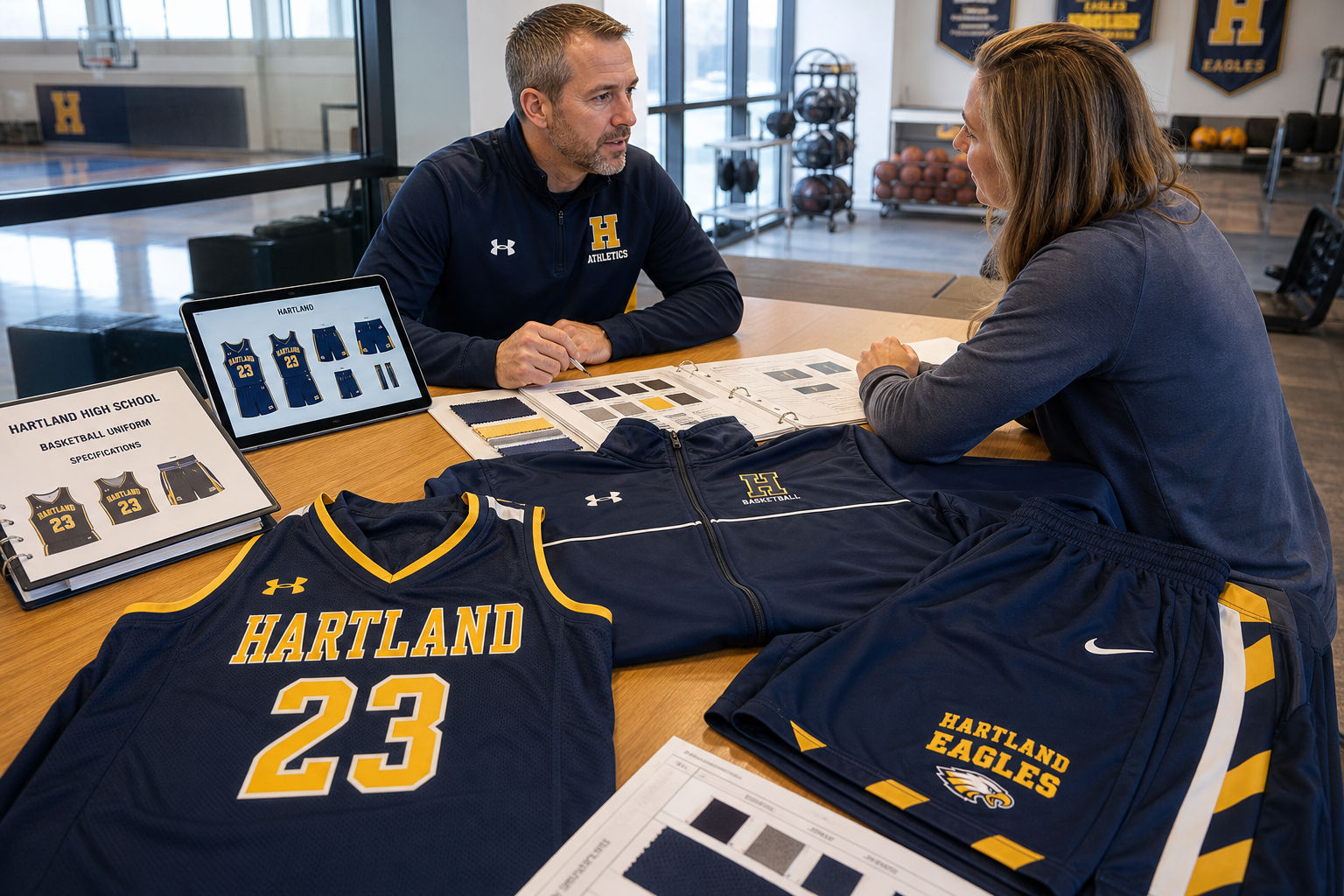
Navigating the vast landscape of suppliers for high school sports apparel can be overwhelming, presenting a significant challenge when you need uniforms and gear that perform well and reflect your school's spirit. Many procurement managers and athletic directors face the agitation of sifting through countless options, fearing a mismatch between expectations and delivery. This article aims to provide a strategic framework, helping you assess potential high school sports apparel companies to ensure a successful partnership.
Choosing the right high school sports apparel company isn't about finding a single "best" option, but rather identifying the supplier that precisely aligns with your specific needs, budget, and quality expectations[^1]. This involves a thoughtful evaluation of their customization capabilities, production capacity, quality control processes, and overall service, ensuring a seamless and reliable procurement experience.
From my experience in B2B apparel manufacturing, I've seen firsthand how crucial this selection process is. There’s no one-size-fits-all answer. Instead, the optimal choice hinges entirely on understanding your unique project requirements. Let's delve into how you can effectively evaluate potential partners.
What Defines the "Best" High School Sports Apparel Companies for Your Needs?
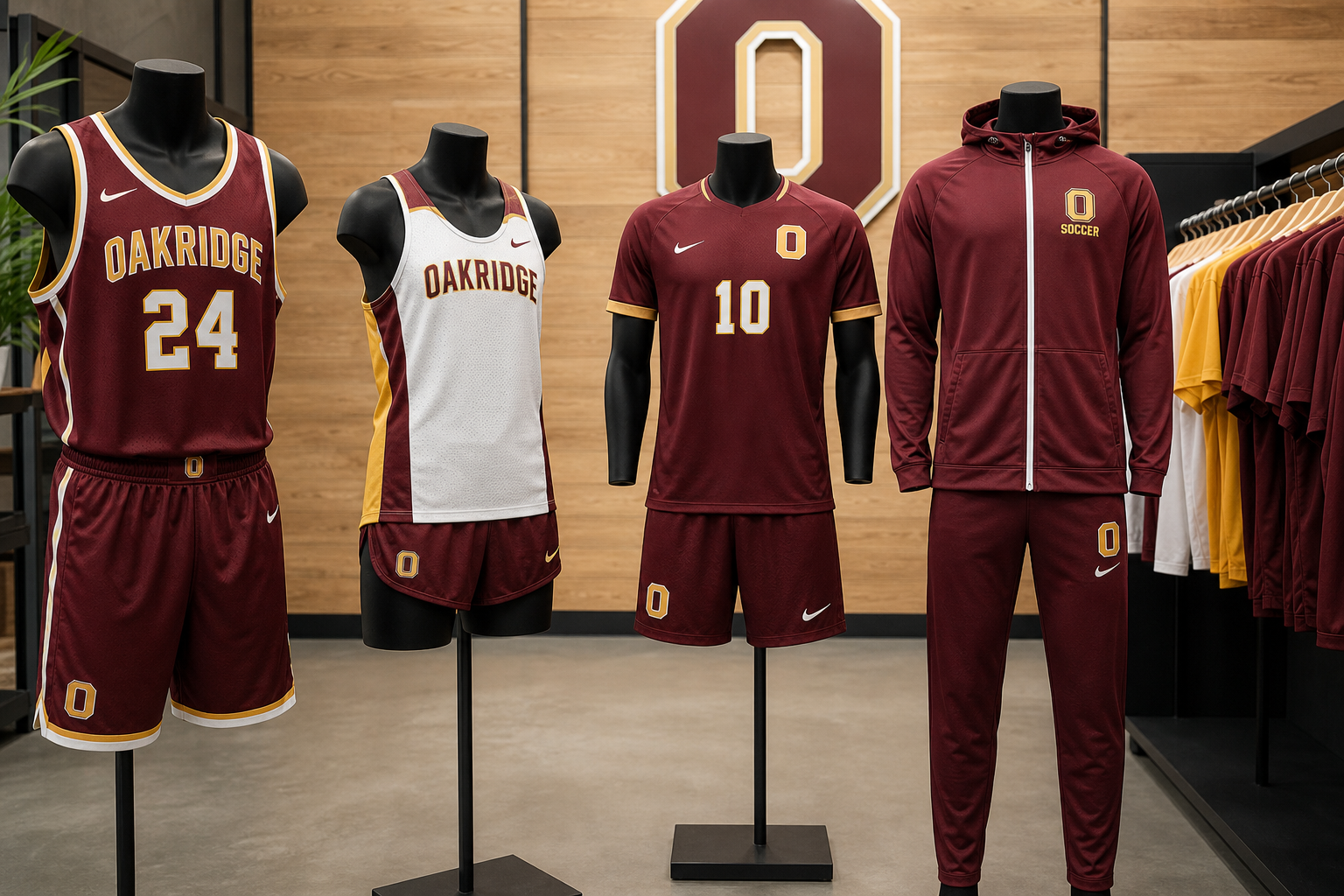
When I consult with clients, a common misconception I encounter is the belief that there's a universally "best" company for high school sports apparel. This often leads to frustration when generic recommendations don't fit specific team or school requirements. The agitation comes from trying to force a square peg into a round hole. The solution is to redefine "best" not as a ranking, but as the perfect alignment with your distinct criteria.
The "best" high school sports apparel companies are those that expertly meet your specific requirements for customization, fabric performance, volume, budget, and delivery timelines, making the selection process highly individualized.
Dive Deeper: Articulating Your Apparel Requirements
From my perspective, successful procurement begins with a clear internal understanding of your needs. Before even approaching potential high school sports apparel companies, it's vital to articulate what you truly require. This isn't just about "a uniform"; it's about a detailed specification.
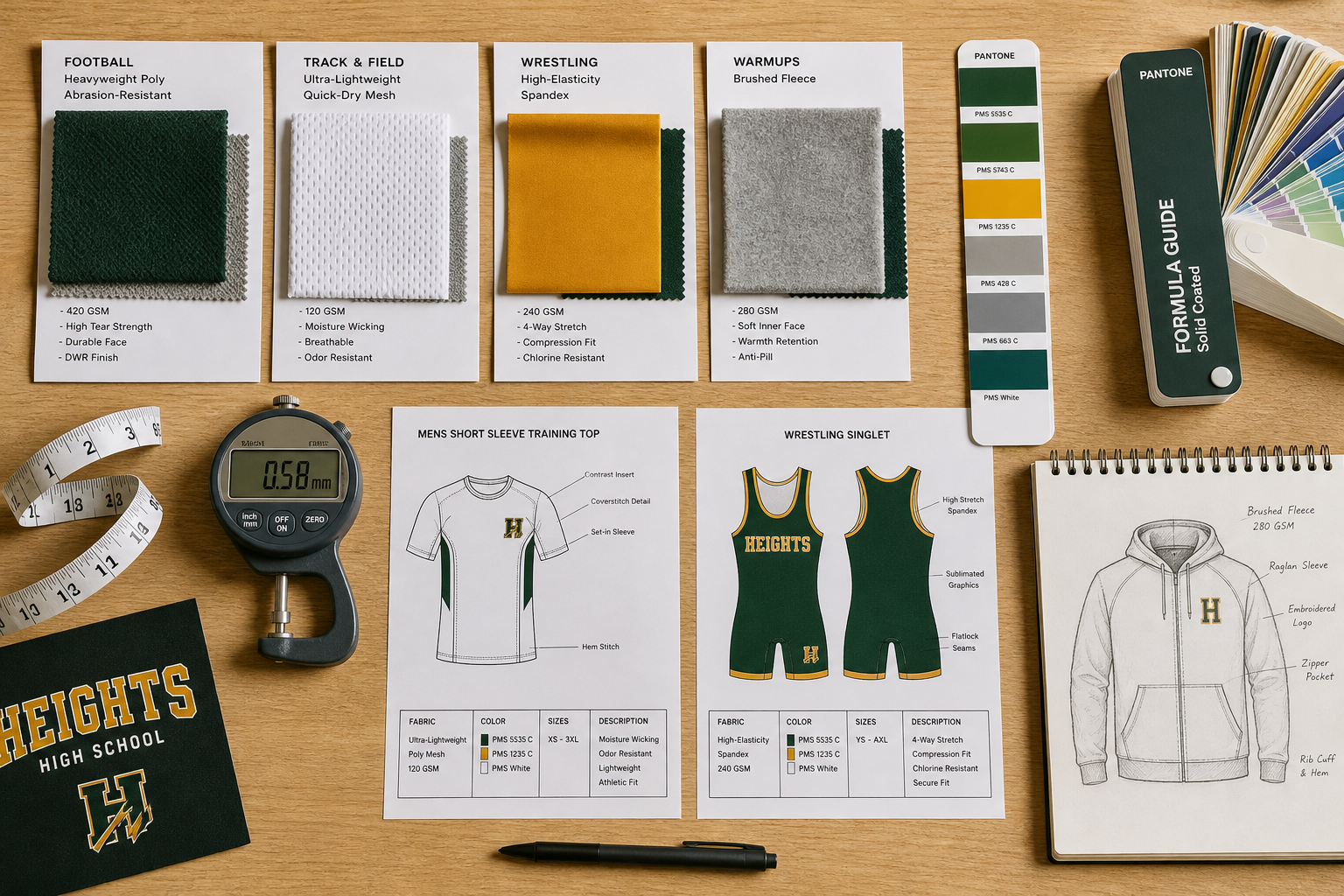
Consider the sport itself: Is it for a rigorous contact sport like football, requiring robust, impact-resistant materials, or a sport like track and field, where lightweight, moisture-wicking fabrics are paramount[^2]? Each sport has unique demands regarding material durability, stretch, breathability, and fit.[^3] For instance, a basketball jersey needs excellent ventilation and freedom of movement, while a wrestling singlet requires extreme elasticity and resilience. My team has developed countless garments for diverse sports, and the material choices are always foundational.
Beyond the sport, think about the level of customization. Do you need simple screen-printed logos, or are you looking for intricate embroidery, sublimated designs, or even bespoke pattern development? Some high school sports apparel companies specialize in basic off-the-shelf options with minimal branding, while others, like my company, offer full OEM/ODM (Original Equipment Manufacturer/Original Design Manufacturer) services, allowing for complete control over design, fabric, and fit. Understanding your desired aesthetic and branding complexity will significantly narrow down your options.
Your budget is another critical factor. While it's tempting to seek the lowest price, especially for high school budgets, it's essential to balance cost with quality and longevity. A cheaper uniform that falls apart after one season isn't cost-effective in the long run.[^4] I always advise clients to consider the total cost of ownership. What's the expected lifespan of the garment? How frequently will it need to be replaced? Investing a little more upfront in durable materials and quality construction can save money over time and enhance team morale.
Finally, consider your production volume and lead times. Are you ordering for a single team of 15 athletes, or an entire athletic department with hundreds of students across multiple sports? And when do you need the apparel delivered? A small, local print shop might handle a small order quickly, but struggle with large volumes or complex designs within a tight timeframe. Larger manufacturers often have more robust production lines and supply chain management, but might have higher minimum order quantities (MOQs). At my factory, we're equipped to handle both smaller custom orders and large-scale productions, thanks to our flexible production lines and extensive experience. Being clear about these details from the outset helps streamline the conversation with potential high school sports apparel companies and prevents costly misunderstandings.
How Do You Evaluate High School Sports Apparel Companies for Quality and Reliability?
I've often seen buyers make decisions based purely on price or a quick online search, only to face significant disappointment when the product arrives. The problem stems from overlooking crucial indicators of quality and reliability, leading to inconsistent products or missed deadlines. This agitation can disrupt an entire season. My solution, honed through years of client interactions, is to scrutinize a supplier's operational integrity.
To evaluate high school sports apparel companies for quality and reliability, focus on their certifications, manufacturing processes, quality control protocols, and transparent communication, ensuring their capabilities align with your standards.
Dive Deeper: Assessing Manufacturing and Quality Assurance
When selecting high school sports apparel companies, a deep dive into their manufacturing and quality assurance practices is non-negotiable. This is where the rubber meets the road, separating truly capable suppliers from those who merely offer attractive prices.
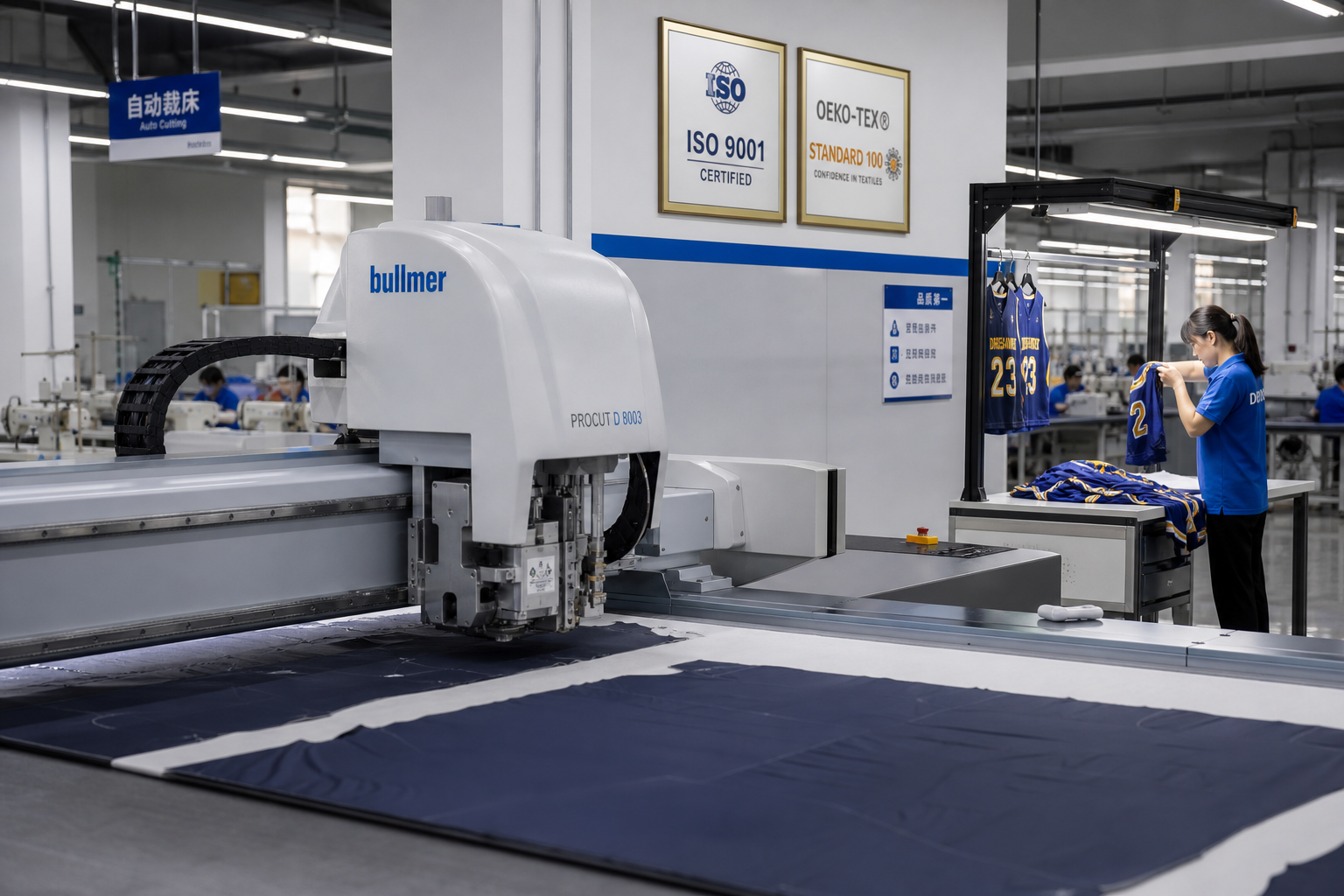
Firstly, inquire about their factory's certifications. These aren't just fancy badges; they represent adherence to international standards and best practices[^5]. For instance, my company holds certifications such as OEKO-TEX®, ISO9001, CE, SC, AZO, Reach, and Green Product Certification. These indicate compliance with environmental, safety, and quality management systems. OEKO-TEX® ensures fabrics are free from harmful substances[^6], crucial for skin-contact garments worn during strenuous activity. ISO9001 signifies a robust quality management system[^7], meaning consistent processes are in place to meet customer and regulatory requirements. When high school sports apparel companies can provide these, it offers a strong foundation of trust and compliance.
Next, delve into their actual production capabilities and equipment. Do they use modern, efficient machinery? My factory, for example, is equipped with industry-leading CNC Auto Cutter / Auto Cutting Machines. This advanced equipment doesn't just increase efficiency; it significantly enhances precision and consistency in cutting fabric[^8], which is fundamental to the fit and finish of the final garment. Understanding a supplier’s technological investment can tell you a lot about their commitment to quality and scalability.
Crucially, ask about their quality control (QC) processes. A reliable manufacturer won't just inspect at the end; they'll have checks at every stage[^9]. We implement multi-stage inspections, including raw material incoming inspection, in-process checks, and a final comprehensive inspection before shipment. This typically involves:
- Fabric Inspection: Checking for defects, color consistency, and adherence to specified technical properties (e.g., elasticity, moisture-wicking).
- Cutting Inspection: Verifying precise cuts according to patterns.
- Sewing Line Inspection: Monitoring seam integrity, stitch density, and overall garment construction.
- Finished Product Inspection: A thorough check of appearance, measurements, elasticity, wash durability, and resistance to deformation.
Each batch of our products undergoes rigorous testing, including elasticity tests, wash durability tests, abrasion and deformation resistance tests, and stretch recovery tests. This ensures the apparel maintains its shape and performance even after repeated use and washing[^10] – a critical factor for high school sports teams.
Finally, consider their overall production capacity and experience. My factory, with 15,000㎡ of space and 150 employees across multiple production lines, has a monthly capacity of up to 200,000 pieces. This scale allows us to handle various order sizes, from small custom batches to large wholesale volumes, without compromising delivery schedules. Experience also plays a huge role; with 12 years in sportswear OEM/ODM, we've encountered and solved most challenges, providing a smoother process for our clients. Asking for concrete examples of past projects or client testimonials can also provide valuable insight into their reliability and consistency in delivering quality high school sports apparel.
What Customization and Service Levels Do High School Sports Apparel Companies Provide?
Often, when working with clients, I find they are looking for more than just a basic uniform; they want their high school sports apparel to truly represent their team's identity. The problem with many suppliers is a one-size-fits-all approach, leading to generic designs and limited branding. This agitation stems from a lack of creative control and unique representation. My solution is to seek out high school sports apparel companies that offer comprehensive customization and a proactive service model.
Effective high school sports apparel companies offer extensive customization options, including original design, material selection, branding applications, and tailored sizing, coupled with responsive communication and comprehensive project management services.
Dive Deeper: Tailoring Solutions and Client Support
When exploring high school sports apparel companies, the breadth and depth of their customization services are paramount. It’s about transforming a concept into a tangible, high-performance garment that resonates with your team's unique brand.
Start by inquiring about their design and development capabilities. Do they have an in-house R&D team? My company boasts a 20-person professional R&D and design team, each with over 10 years of industry experience. This isn't just about drawing logos; it's about understanding current market trends, translating your vision into technical specifications, and developing patterns that offer optimal fit and functionality for athletes. This includes everything from high-waisted yoga pants and sports bras to Muslim-style sportswear and tennis skirts, catering to a wide array of sports and cultural needs.
Beyond design, delve into material sourcing. High school sports apparel requires specific functional fabrics. Ask if they can match fabrics to specific usage scenarios. We specialize in selecting high-elastic, skin-friendly, and functional sports fabrics that are breathable, moisture-wicking, and durable, ensuring comfort and performance. This could mean selecting a quick-dry polyester for track uniforms[^11], a supportive blend for sports bras, or a rugged, stretchable fabric for contact sports. The ability to customize fabric composition and properties is a key differentiator.
Consider the various customization techniques for branding and aesthetics. Does the supplier offer:
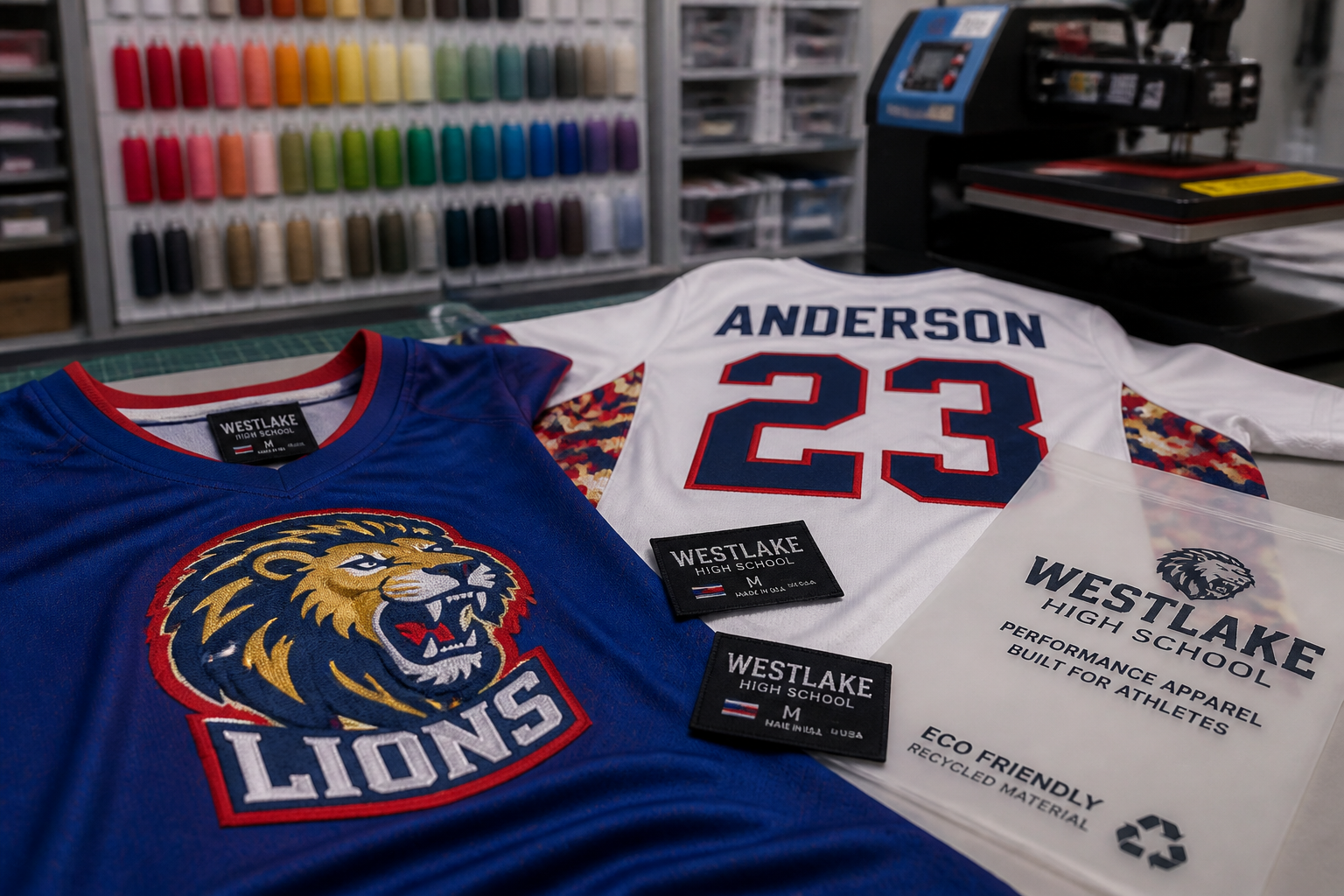
- Printing: Screen printing, digital printing, sublimation for vibrant, full-coverage designs.
- Heat Transfer: For logos, numbers, and names.
- Embroidery: For a premium, textured look.
- Custom配色 (Custom Color Matching): Ensuring your school's exact colors are replicated.
- 定制尺码 (Custom Sizing): Beyond standard S, M, L, allowing for precise fits for diverse body types within your team[^12].
- 专属包装 (Exclusive Packaging): Branded poly bags or hangtags that elevate the unboxing experience.
- LOGO标签定制 (LOGO Label Customization): Integrated woven labels or printed neck tags.
The flexibility to combine these elements allows for truly unique high school sports apparel that stands out.
Finally, evaluate their service approach. Do they offer a full-process, one-stop customization service, from original design and sample development to fabric selection, mass production, quality control, and logistics delivery? This integrated approach minimizes headaches and ensures consistency. Clear communication channels, responsiveness to inquiries, and a structured project management methodology are hallmarks of excellent service. We pride ourselves on providing precise, real-time updates and proactive problem-solving, making the entire procurement journey as smooth as possible. For high school sports apparel companies, a strong service commitment means peace of mind for you.
Frequently Asked Questions
What's the typical lead time for high school sports apparel orders?
Lead times for high school sports apparel vary significantly based on customization complexity, order volume, and the supplier's production capacity. Standard off-the-shelf items with basic branding might take 2-4 weeks, while fully customized OEM/ODM orders with new designs can range from 8-12 weeks or more. Always clarify timelines upfront.
How important are certifications when choosing high school sports apparel companies?
Certifications are highly important as they validate a manufacturer's adherence to quality, environmental, and ethical standards. Standards like OEKO-TEX® ensure product safety, while ISO9001 indicates robust quality management. For high school sports apparel, these certifications provide assurance of material safety, durability, and consistent production quality.
Can high school sports apparel companies handle small batch orders?
Many high school sports apparel companies, especially those offering OEM/ODM services, can accommodate small batch orders, though minimum order quantities (MOQs) will vary. It's crucial to discuss your specific volume requirements early in the negotiation process to ensure the supplier is a good fit for your project size.
What's the best way to manage revisions or changes to an apparel order?
The best way to manage revisions for high school sports apparel orders is through clear, written communication, utilizing detailed technical specifications and approved samples. Ensure your contract outlines a process for design changes and their potential impact on cost and delivery timelines. Proactive communication with your supplier is key.
Conclusion
Selecting the right partner from the many high school sports apparel companies is a strategic decision that goes beyond merely comparing prices. It demands a thorough understanding of your specific needs, a diligent evaluation of a supplier's capabilities, and a commitment to transparent communication. By focusing on factors like customization potential, quality control certifications, production capacity, and responsive service, you can mitigate risks and ensure your team receives high-performance, branded apparel that inspires confidence.
If your school or brand is seeking a dedicated partner for wholesale production, OEM/ODM solutions, or comprehensive product development for high school sports apparel, we're here to help. With our extensive experience in manufacturing yoga wear, sportswear, and unisex styles for global brands, we offer end-to-end custom manufacturing services. Let's discuss how we can bring your vision to life with quality, precision, and efficiency.
Contact Us: Phone: +86 18775986697 Email: justin@purongsports.com Address: 7th Floor, Building A, Hesheng Technology Park, No. 21 Nanshe Road, Dongfeng Community, Humen Town, Dongguan City, Guangdong Province, China
[^1]: "Supplier selection and order allocation: a literature review - PMC", https://pmc.ncbi.nlm.nih.gov/articles/PMC8127846/. Supplier-selection research describes vendor choice as a multi-criteria decision in which cost, quality, delivery performance, and buyer-specific requirements are evaluated together rather than ranked by a single factor. Evidence role: expert_consensus; source type: paper. Supports: Supplier selection is commonly treated as a multi-criteria decision involving cost, quality, delivery, capacity, and buyer-specific requirements.. [^2]: "The Role of Sports Clothing in Thermoregulation, Comfort ...", https://pmc.ncbi.nlm.nih.gov/articles/PMC9051004/. Textile research on athletic clothing shows that moisture-management properties and lightweight construction can improve sweat transport and thermal comfort during endurance and high-exertion activities. Evidence role: mechanism; source type: paper. Supports: Moisture-management and low-bulk fabrics help regulate sweat transport and thermal comfort during high-exertion activity.. Scope note: This would support the general performance rationale for track apparel, not prove that every track uniform must use a particular fabric. [^3]: "Advancements in functional smart and wearable textiles for ...", https://pmc.ncbi.nlm.nih.gov/articles/PMC12716241/. Research on performance sportswear indicates that garment materials and construction are selected according to sport-specific demands such as mobility, durability, breathability, and fit. Evidence role: general_support; source type: paper. Supports: Sportswear design literature links apparel performance requirements to sport-specific movement, comfort, durability, and thermal needs.. [^4]: "Evaluation of GSA Efforts To Implement Life Cycle Costing ...", https://www.gao.gov/products/psad-81-14. Public procurement guidance on life-cycle costing notes that purchase decisions should account for costs over the useful life of a product, including replacement and maintenance, not merely the initial price. Evidence role: general_support; source type: government. Supports: Procurement guidance often recommends considering lifecycle or total ownership costs, including replacement and maintenance, rather than purchase price alone.. Scope note: The evidence would support the procurement principle generally rather than provide uniform-specific cost data. [^5]: "ISO - Certification", https://www.iso.org/certification.html. International standards organizations describe certification as third-party confirmation that an organization or product has been assessed against specified requirements, providing evidence of conformity to recognized practices. Evidence role: definition; source type: institution. Supports: Certification to recognized standards indicates that an organization has been assessed against defined requirements for management systems or product conformity.. Scope note: Certification indicates conformity to a standard but does not by itself guarantee the quality of every shipment. [^6]: "Oeko-Tex", https://en.wikipedia.org/wiki/Oeko-Tex. OEKO-TEX STANDARD 100 documentation states that certified textile articles are tested for a catalogue of harmful substances, including legally regulated and selected non-regulated chemicals relevant to human health. Evidence role: definition; source type: institution. Supports: OEKO-TEX STANDARD 100 tests textile articles for regulated and selected non-regulated substances considered harmful to human health.. Scope note: The certification supports tested chemical safety within the scope of the standard, not an absolute guarantee that all possible harmful substances are absent. [^7]: "ISO 9001:2015 - Quality management systems", https://www.iso.org/standard/62085.html. ISO describes ISO 9001 as a quality management system standard focused on an organization's ability to consistently provide products and services that meet customer and applicable regulatory requirements. Evidence role: definition; source type: institution. Supports: ISO 9001 specifies requirements for a quality management system aimed at consistent products and services meeting customer and regulatory requirements.. Scope note: ISO 9001 supports the existence of a management system, not direct proof that a particular apparel order will meet all buyer expectations. [^8]: "Comparative Study on Automatic Fabric Cutting Machine ...", https://www.academia.edu/96795707/Comparative_Study_on_Automatic_Fabric_Cutting_Machine_and_Straight_Knife_Cutting_Machine. Studies of computerized apparel cutting systems report that automated cutting can improve repeatability and dimensional accuracy in fabric pieces, which contributes to more consistent garment assembly. Evidence role: mechanism; source type: paper. Supports: Automated or computer-controlled cutting systems can improve repeatability and dimensional accuracy in garment production compared with manual cutting.. Scope note: The evidence would support the general manufacturing mechanism, not verify the performance of a specific factory's equipment. [^9]: "Final inspection in garment quality control", https://www.facebook.com/groups/gpq.rqsprofessionalsociety/posts/2068285223981074/. Apparel manufacturing quality-control references identify staged inspection of materials, cutting, sewing, and finished garments as a standard method for detecting defects before shipment. Evidence role: expert_consensus; source type: education. Supports: Garment quality-control references commonly describe inspection at raw material, cutting, sewing, and final product stages.. [^10]: "Physical Testing Laboratory - Zeis Textiles Extension", https://textiles.ncsu.edu/zte/physical-testing-laboratory/. Textile testing standards use measures such as dimensional change after laundering, abrasion resistance, and stretch recovery to evaluate whether fabrics and garments retain relevant performance characteristics during use. Evidence role: mechanism; source type: institution. Supports: Textile test methods evaluate laundering dimensional change, abrasion resistance, and stretch recovery as indicators of garment durability and performance retention.. Scope note: Such tests indicate expected durability under standardized conditions and may not fully reproduce all field-use stresses. [^11]: "Thermal and Moisture Management Properties of Knitted ...", https://pmc.ncbi.nlm.nih.gov/articles/PMC12029065/. Sports textile research notes that polyester is frequently used in athletic apparel because its hydrophobic fiber properties and fabric engineering can promote moisture transport and faster drying than many absorbent fibers. Evidence role: mechanism; source type: paper. Supports: Synthetic polyester fabrics are widely studied for sportswear because their hydrophobic properties and engineered structures can support moisture transport and relatively fast drying.. Scope note: Drying performance depends on yarn, knit, finish, and garment construction, so the evidence supports polyester as a common suitable option rather than a universal solution. [^12]: "Evaluating machine learning models for clothing size ... - PMC", https://pmc.ncbi.nlm.nih.gov/articles/PMC12630603/. Anthropometric studies of apparel fit show that body dimensions and proportions vary widely across populations, so standard size categories may not provide accurate fit for all wearers. Evidence role: general_support; source type: paper. Supports: Anthropometric research shows that body dimensions and shapes vary substantially, making standard sizing systems imperfect for many wearers.. Scope note: This supports the rationale for custom sizing generally, not the fit outcome of any specific team's uniforms.
<!--[googlesitekit-end-of-content]-->