
How to Find a Clothing Manufacturer for Your Activewear Brand
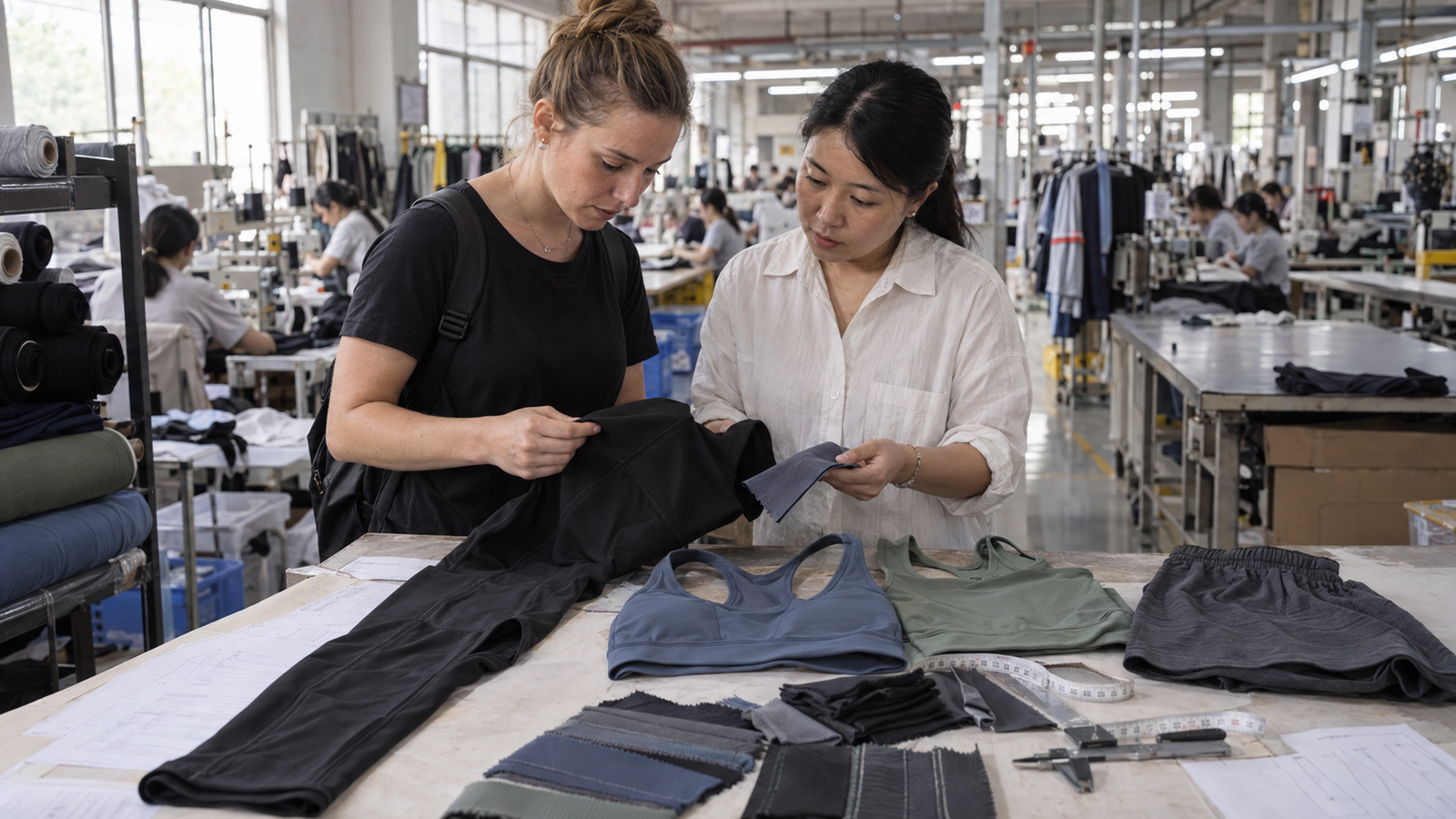
A clothing manufacturer can make or break my activewear brand before the first collection even launches. The problem is that many factories look similar online. That uncertainty can lead to poor fit, missed deadlines, and quality issues. The solution is to evaluate suppliers with a clear, buyer-focused process.
To find a clothing manufacturer for your activewear brand, I first define my product, target price, order quantity, fabric needs, and quality standard. Then I shortlist OEM/ODM factories, verify certifications, request samples, compare production capability, check communication speed, and confirm quality control before placing a bulk order.
Finding the right factory is not only about the lowest quote. It is about matching my brand goals with a supplier’s real production strengths. Below, I break down the process I would use when sourcing yoga wear, gym wear, sports bras, leggings, or full activewear collections.
What Should I Prepare Before Contacting a Clothing Manufacturer?
Many buyers contact a clothing manufacturer too early. I understand the excitement, but unclear product details create slow replies, vague quotes, and weak samples. If I prepare the right information first, I can save time and look more professional from the first message.
A buyer should prepare product sketches, reference photos, fabric ideas, size range, logo needs, packaging requirements, target price, estimated order quantity, and delivery timeline before contacting a clothing manufacturer. Clear details help the factory quote faster, suggest better materials, and judge whether the project fits its production line.
Start With a Simple Product Brief
I do not need a perfect fashion-school tech pack at the first step. But I do need a clear brief. For activewear, the factory needs to understand both the look and the function.
I usually include:
- Product type: yoga leggings, sports bra, gym shorts, hoodie, tennis skirt, golf polo, or full set
- Fit style: compression, relaxed, high-waist, seamless look, cropped, oversized, or modest fit
- Fabric function: moisture-wicking, squat-proof, four-way stretch, brushed hand feel, recycled yarn, or cooling touch
- Branding: heat transfer logo, woven label, silicone logo, embroidery, hang tag, or custom packaging
- Size range: XS–XL, plus size, men’s sizing, women’s sizing, or unisex sizing
- Order plan: sample only, small trial order, or long-term wholesale production
When I work with activewear, I pay close attention to movement. A yoga legging is not judged only by how it looks on a hanger. It must stretch, recover, stay opaque, and keep seams stable during training.[^1]
Use a Tech Pack When Possible
A tech pack helps the factory reduce guessing. It can include:
| Item | Why It Matters |
|---|---|
| Flat sketch | Shows shape, seam lines, and design details |
| Measurement chart | Controls fit and grading |
| Fabric composition | Helps match stretch, weight, and feel |
| Color codes | Reduces color misunderstanding |
| Logo placement | Avoids branding mistakes |
| Stitching details | Improves production consistency |
| Packaging notes | Supports retail and e-commerce needs |
If I do not have a full tech pack, I can still send reference samples or photos. However, I should avoid saying only “I want something like Lululemon” or “make this cheaper.” A professional factory needs measurable details.
Know My Target Market
Different markets expect different things. A European yoga brand may care deeply about OEKO-TEX®[^2] documents and sustainable packaging. A U.S. gym brand may focus on compression, squat-proof testing, and fast reorder capability. A Middle East buyer may need modest sportswear, long sleeves, and hijab-friendly active sets.
Before I ask for a quote, I define:
- My customer profile
- My expected retail price
- My quality level
- My launch date
- My first-order quantity
This makes supplier selection much easier. It also helps the manufacturer recommend the right fabric instead of only quoting the cheapest option.
Where Can I Find a Clothing Manufacturer for Activewear?
Finding a clothing manufacturer is not hard. Finding one that truly understands activewear is the real task. Many general garment factories can sew basic T-shirts, but sportswear needs stretch fabric control, fit testing, elastic recovery checks, and stable bulk production.[^3]
I can find an activewear clothing manufacturer through B2B platforms, Google search, trade shows, referrals, sourcing agents, and direct factory websites. The best choice is usually a factory that shows relevant product experience, clear OEM/ODM service, verified business documents, sample support, and responsive communication.
Compare Common Sourcing Channels
Each sourcing channel has strengths and limits. I do not rely on only one source. I usually compare several suppliers before I choose.
| Channel | Best For | Watch Out For |
|---|---|---|
| Alibaba / Global Sources | Fast supplier discovery | Similar listings, trading companies, unclear capability |
| Google search | Finding factory websites | SEO pages may not prove production strength |
| Trade shows | Face-to-face evaluation | Travel cost and limited time |
| Referrals | Higher trust | Limited supplier options |
| Sourcing agents | Local support | Extra fees and less direct factory contact |
| B2B networking | Slow replies and mixed supplier quality |
Look for Activewear-Specific Capability
Activewear is different from normal casual wear. It needs better control in fabric, cutting, sewing, and testing. I look for signs that a supplier has real experience with:
- Yoga leggings and high-waist fitness pants
- Sports bras and supportive gym tops
- Tennis skirts, golf shirts, and sports dresses
- Men’s training wear and compression tops
- Modest sportswear and Muslim activewear
- Swimwear or quick-dry sports pieces
- Custom logo, label, packaging, and color development
For example, in my own manufacturing context, I focus on B2B OEM/ODM activewear production. That means the work is not retail selling. The work is helping brands, wholesalers, importers, and e-commerce sellers develop products from design to bulk production.
Check Whether the Supplier Is a Factory or a Trading Company
A trading company is not always bad. Some trading companies manage suppliers well. But I need to know who is actually controlling production.
I usually ask:
- Do you own your production workshop?
- Can I see factory photos or a video call tour?
- What product categories do your lines produce most often?
- What is your monthly production capacity?
- Who handles pattern making and sampling?
- What quality checks happen before shipment?
A real activewear factory should be comfortable answering these questions. If the supplier avoids factory details, I become careful.
My simple rule is this: if the supplier cannot explain its production process clearly, I should not expect it to control my bulk order clearly.
Use Supplier Location as One Factor
Many activewear brands source from China because the supply chain is mature.[^4] Fabric mills, trims suppliers, label makers, packaging vendors, and export logistics are close together. In Dongguan, for example, sportswear factories often benefit from strong garment clusters and fast material access.[^5]
However, location is only one factor. I still verify product quality, communication, certifications, and delivery performance. A famous manufacturing region does not automatically make every supplier qualified.
How Do I Evaluate a Clothing Manufacturer’s Quality Control?
A clothing manufacturer may show beautiful product photos, but quality control decides whether my customers return or complain. Activewear has more stress points than regular apparel. If seams break, fabric pills, or leggings turn see-through, my brand reputation suffers quickly.
I evaluate a clothing manufacturer’s quality control by checking its inspection process, fabric testing, sample accuracy, measurement tolerance, seam strength, color consistency, wash performance, and pre-shipment inspection records. I also request test reports and verify certifications directly when compliance matters for my target market.
Key Quality Checks for Activewear
For sportswear, I focus on performance and durability. A garment can look good in a photo but fail during movement.
Important checks include:
- Fabric stretch and recovery
- Squat-proof opacity
- Seam strength
- Color fastness to washing
- Color fastness to rubbing
- Pilling resistance
- Shrinkage after washing
- Size tolerance
- Logo adhesion
- Elastic waistband recovery
- Needle damage on stretch fabric
If I am sourcing yoga leggings, I always care about waistband stability and fabric opacity. If I am sourcing sports bras, I also care about support, lining, cup position, and elastic pressure.
Ask About the Factory’s QC Process
A good supplier should have checks at several stages:
- Material inspection before cutting
- Pattern and size confirmation before bulk production
- Cutting inspection for fabric accuracy
- Inline inspection during sewing
- Finished product inspection after trimming and pressing
- Packing inspection before shipment
- Final random inspection[^6] when needed
In my business context, quality checks may include appearance inspection, size measurement, elasticity testing, seam strength checks, washing tests, abrasion resistance checks, and stretch recovery tests. These are practical controls that buyers should discuss in detail before order confirmation.
Understand Certifications Carefully
Certifications can support supplier evaluation, but I never treat a logo on a website as proof by itself. I ask for current documents and verify them when needed.
Common documents in activewear sourcing may include:
| Document / Standard | What Buyers Usually Check |
|---|---|
| OEKO-TEX® | Textile safety for harmful substances |
| ISO 9001[^7] | Quality management system |
| REACH[^8] | Chemical compliance for EU market |
| RoHS | Restricted hazardous substances, often material-related |
| SGS / TÜV reports | Third-party testing or audit documents |
| AZO-free test[^9] | Restricted azo dyes |
| PFAS-related testing[^10] | Fluorinated chemical concerns in some markets |
I recommend that buyers verify certificates with the issuing body or a qualified compliance professional. Market rules can change. Product-specific requirements also depend on fabric, trims, destination country, and sales channel.
Do Not Skip Samples
Samples are the most practical quality test before bulk production. I usually review:
- Fit on body
- Fabric hand feel
- Stitching cleanliness
- Logo position
- Color accuracy
- Size measurements
- Stretch and recovery
- Comfort during movement
- Washing result after 1–3 cycles
A first sample may not be perfect. That is normal. What matters is how the manufacturer corrects issues. If the supplier listens, records revisions, and improves the second sample, that is a good sign. If the same mistake repeats, I should slow down.
What Questions Should I Ask Before Choosing a Clothing Manufacturer?
Choosing a clothing manufacturer without asking detailed questions is risky. I may get a good sample but poor bulk production. I may also discover late that the MOQ, fabric lead time, or packaging options do not match my launch plan.
Before choosing a clothing manufacturer, I ask about MOQ, sampling time, bulk lead time, fabric sourcing, customization options, quality control, payment terms, certifications, production capacity, revision policy, and export experience. These questions show whether the supplier can support both my first order and future growth.
Core Questions for Supplier Evaluation
I keep my questions direct. A strong supplier should answer clearly.
Product and development questions
- Can you produce my product category?
- Do you offer OEM, ODM, or both?
- Can your design team help with style development?
- Can you recommend fabric based on my target price?
- Can you make custom size charts?
- Can you support private label packaging?
Production questions
- What is your MOQ per style and color?
- What is the sample lead time?
- What is the bulk production lead time?
- What is your monthly capacity?
- Do you use auto cutting equipment?
- How do you control color difference between batches?
Quality and compliance questions
- What inspections do you perform?
- Can you provide test reports?
- Can I arrange third-party inspection?
- What is your tolerance for measurements?
- How do you handle defective goods?
- Which certificates can I verify?
Compare Answers, Not Just Prices
A low price can be attractive. But in activewear, a price that is too low may mean weaker fabric, unstable stitching, poor color fastness, or limited inspection. I compare quotes with details.
| Quote Item | Why I Check It |
|---|---|
| Fabric composition | Affects stretch, comfort, and price |
| Fabric weight | Changes opacity and durability |
| MOQ | Impacts startup budget |
| Logo method | Affects cost and wash durability |
| Packaging | Matters for retail and e-commerce |
| Sample fee | Shows development cost |
| Lead time | Affects launch calendar |
| Inspection standard | Reduces shipment risk |
I have seen buyers compare only the final unit price. That approach can cause trouble. One supplier may quote a 220 gsm nylon-spandex fabric, while another quotes a thinner polyester-spandex fabric. Both may call the product “leggings,” but the market result is different.
Ask About Communication Workflow
Communication is part of production quality. If a supplier replies slowly during sampling, it may also respond slowly when production issues appear.
I look for:
- Clear quotation format
- Fast reply time
- Willingness to explain options
- Photos or videos during sampling
- Written confirmation of revisions
- Production updates before shipment
- Honest answers about limitations
A professional manufacturer will not say yes to everything. Sometimes, the best answer is, “This design is possible, but the cost will increase,” or “This fabric needs testing before bulk production.” I trust that more than a simple yes.
Discuss Growth Early
If my activewear brand starts with 100 pieces, I still want to know whether the supplier can support 1,000 or 10,000 pieces later. A factory with flexible small-order support and scalable production is useful for a growing brand.
For example, a factory may support small trial orders from 50–100 pieces, while also having larger monthly capacity for repeat orders. That helps startups test the market without losing the path to growth.
How Can I Compare OEM and ODM Clothing Manufacturer Services?
OEM and ODM are easy to confuse. I see many new activewear founders use the terms loosely. That can create misunderstanding during quotation. If I know the difference, I can choose the right service model and control my development cost better.
An OEM clothing manufacturer produces based on my existing design, tech pack, or sample. An ODM clothing manufacturer offers ready styles, design support, or product development services that I can customize.[^11] OEM gives more control, while ODM can save time and reduce development work.
OEM vs ODM at a Glance
| Service Type | Best For | Main Advantage | Main Risk |
|---|---|---|---|
| OEM | Brands with original designs | More control and differentiation | Needs stronger product documents |
| ODM | Startups or fast launches | Faster development and lower design burden | Styles may be less unique |
| Hybrid | Growing brands | Balance of speed and customization | Requires clear agreement |
When OEM Makes Sense
I choose OEM when I already have a strong design idea. This works well when my brand has a unique cut, special panel design, custom waistband, original sports bra structure, or specific modest activewear concept.
OEM is also better when:
- I need brand-exclusive designs
- I already have a sample to improve
- I have a clear size chart
- I care about detailed fit control
- I want to build a long-term signature product
The challenge is that OEM takes more preparation. I may need several sample rounds. I also need to approve details carefully before bulk production.
When ODM Makes Sense
ODM is useful when I want to launch faster. A manufacturer may already have proven styles for yoga leggings, sports bras, training tops, tennis skirts, or hoodies. I can change colors, fabrics, logos, trims, and packaging.
ODM is often suitable for:
- New activewear startups
- Cross-border e-commerce sellers
- Wholesalers testing a new category
- Brands needing seasonal quick launches
- Buyers with limited design resources
The risk is similarity. If many buyers use the same base style, my brand may not stand out. I can reduce that risk by customizing fabric, seams, color blocking, logo placement, packaging, and size fit.
Use Professional Evaluation for Special Applications
Some activewear products need extra technical review. Compression wear, swimwear, maternity activewear, high-impact sports bras, and children’s sportswear may involve specific performance or safety concerns. I recommend qualified professional evaluation when the product has application-specific requirements.
A factory can support production, sampling, and testing. But the buyer should still confirm legal, safety, and market requirements for the final sales region.
How Do I Move From Sample to Bulk Order With a Clothing Manufacturer?
The sample stage can feel exciting, but it is also where many mistakes begin. If I approve a sample too quickly, the bulk order may repeat hidden problems. If I manage the process carefully, the final production becomes much more predictable.
To move from sample to bulk order with a clothing manufacturer, I approve the final sample, confirm measurements, lock fabric and color, approve trims and packaging, sign a production agreement, arrange payment, monitor production updates, and perform inspection before shipment. Written confirmation is essential.
Follow a Clear Production Timeline
A typical activewear order may follow this flow:
- Inquiry and product brief
- Initial quotation
- Fabric selection
- Sample making
- Sample review and revision
- Pre-production sample approval
- Deposit payment
- Material purchasing
- Cutting and sewing
- Inline inspection
- Final inspection
- Packing and shipment
Lead times vary. A simple ODM style may move faster. A custom OEM design with special fabric, custom dyeing, and branded packaging may take longer.
Confirm the Pre-Production Sample
The pre-production sample is the reference for bulk goods. I do not approve it casually. I check:
- Style details
- Measurements
- Fabric composition and weight
- Color
- Logo method
- Stitching
- Label placement
- Packaging
- Fit on model or fit tester
- Washing performance if needed
If I approve a sample with a small issue, I write the correction clearly. For example: “Bulk production approved only if waistband height is increased by 1 cm.” Written records protect both sides.
Clarify Payment and Inspection Terms
Common payment terms vary by supplier and order size. Many factories request a deposit before production and balance before shipment. I do not treat payment terms as only a finance issue. They also affect risk control.
I like to confirm:
- Deposit percentage
- Balance payment timing
- Bank fees
- Currency
- Production lead time after deposit
- Late delivery handling
- Defect handling
- Third-party inspection permission
- Shipping method
For larger orders, a third-party final inspection can be useful. The inspection company can check measurements, workmanship, packing, and quantity based on an agreed standard. This does not replace factory QC, but it gives the buyer another layer of control.
Plan Reorders Before the First Order Ships
If I plan to reorder, I ask the manufacturer to keep production records. These include fabric code, color code, size chart, pattern file, logo file, and packaging specification. This helps future batches stay consistent.
Activewear brands depend on repeat customer trust. If my best-selling leggings feel different every season, customers notice. A stable factory relationship helps me control that.
Frequently Asked Questions
What is the best MOQ for a new activewear brand?
The best MOQ depends on budget, style count, and market testing plans. Many new brands start with 50–100 pieces per style if the supplier supports small batches. Larger orders usually reduce unit cost, but small trial orders help reduce inventory risk.
How long does it take to make custom activewear?
A simple sample may take 7–15 days, while bulk production often takes 25–45 days after approval and deposit.[^12] Custom fabric, dyeing, special trims, or complex designs can take longer. I always confirm the timeline in writing before ordering.
Should I choose the cheapest clothing manufacturer?
I would not choose only by the cheapest price. Activewear quality depends on fabric, stitching, fit, testing, and QC. A very low quote may create higher costs later through returns, defects, or brand damage. I compare total value instead.
Do I need a tech pack to contact a factory?
A tech pack is very helpful, but it is not always required at the first inquiry. I can start with reference photos, target fabric, size range, logo needs, and order quantity. For bulk production, a detailed tech pack or confirmed sample is much safer.
How can I verify factory certifications?
I ask the supplier for current certificates and test reports, then check document numbers, dates, product scope, and issuing organization. For important market compliance, I recommend using a qualified testing body, compliance consultant, or third-party inspection service.
Conclusion
Finding the right clothing manufacturer for an activewear brand is a step-by-step sourcing decision, not a quick price hunt. I prepare my product brief, compare OEM/ODM capability, verify quality control, review samples carefully, and confirm production terms in writing. If you need B2B activewear manufacturing, yoga wear development, private label sportswear, or OEM/ODM bulk production, contact Dongguan Pro Sportswear at justin@purongsports.com or +86 136 3017 0657 to discuss your project.
[^1]: "AN EVALUATION OF THE PERFORMANCE OF LEGGINGS ...", https://uknowledge.uky.edu/cgi/viewcontent.cgi?article=1016&context=mat_etds. Research on sportswear performance identifies fabric stretch and recovery, coverage during movement, and seam durability as relevant functional properties for garments such as leggings. Evidence role: general_support; source type: paper. Supports: A textile performance paper should support that activewear garments are evaluated by stretch, recovery, opacity or coverage, and seam durability under movement.. Scope note: The evidence is likely to support these criteria as general activewear performance factors rather than as a single universal standard for all yoga leggings. [^2]: "OEKO-TEX® STANDARD 100", https://www.oeko-tex.com/en/our-standards/oeko-tex-standard-100/. OEKO-TEX describes STANDARD 100 as a certification for textile products tested for harmful substances, supporting its inclusion as a buyer-verifiable textile safety document. Evidence role: definition; source type: institution. Supports: The official OEKO-TEX source should define STANDARD 100 as a certification involving testing textiles for harmful substances.. [^3]: "(PDF) Evaluating the Performance of Fabrics for Sportswear", https://www.academia.edu/64814821/Evaluating_the_Performance_of_Fabrics_for_Sportswear. Textile engineering literature describes stretch, recovery, fit, and seam performance as functional requirements for sportswear, supporting the article’s distinction between activewear production and ordinary apparel construction. Evidence role: mechanism; source type: research. Supports: A neutral textile or apparel engineering source should explain that sportswear performance depends on fabric stretch, recovery, fit, and construction stability during movement.. Scope note: The source may support the technical requirements generally rather than proving that every activewear factory performs these controls. [^4]: "Publication: The Textile-Clothing Value Chain in India and Bangladesh", https://openknowledge.worldbank.org/entities/publication/9bbc6705-0471-5ac4-929d-ab5f887cbc95. International trade statistics identify China as one of the world’s leading exporters of textiles and apparel, providing contextual support for describing China as a mature sourcing base for garment production. Evidence role: statistic; source type: institution. Supports: An institutional trade source should show China’s large role in global textile and apparel exports, which contextualizes claims about supply-chain maturity.. Scope note: Export scale supports the broader supply-chain context but does not directly prove that activewear brands choose China for this reason in every case. [^5]: "[PDF] Peoples Republic of Made in China. Made in Dongguan.", https://apps.fas.usda.gov/newgainapi/api/Report/DownloadReportByFileName?fileName=Made+in+China.++Made+in+Dongguan.+_Guangzhou_China+-+Peoples+Republic+of_9-29-2009.pdf. Government and regional industry materials describe Dongguan as a manufacturing center with textile and apparel activity, offering contextual support for the article’s reference to local garment-cluster advantages. Evidence role: historical_context; source type: government. Supports: A government or academic source should document Dongguan’s role as a garment or textile manufacturing cluster.. Scope note: Such a source would support the regional cluster context, not the capability or reliability of any individual Dongguan factory. [^6]: "ISO 2859-1:1999(en), Sampling procedures for inspection by attributes", https://www.iso.org/obp/ui/#iso:std:iso:2859:-1:ed-2:v1:en. Sampling standards such as ISO 2859-1 describe inspection by attributes using sample lots, supporting the article’s reference to final random inspection as an accepted batch-checking method. Evidence role: mechanism; source type: institution. Supports: A standards source should describe sampling inspection by attributes, which underlies many final random inspection methods.. Scope note: Sampling inspection reduces uncertainty but does not guarantee that all units in a shipment are defect-free. [^7]: "ISO 9000 family - Wikipedia", https://en.wikipedia.org/wiki/ISO_9000_family. The International Organization for Standardization defines ISO 9001 as a standard setting requirements for a quality management system, supporting the article’s description of the certificate. Evidence role: definition; source type: institution. Supports: The ISO source should define ISO 9001 as a standard specifying requirements for a quality management system.. Scope note: ISO 9001 certification indicates a management-system framework, not direct proof that a specific shipment will meet activewear quality requirements. [^8]: "Registration, Evaluation, Authorisation and Restriction of ...", https://en.wikipedia.org/wiki/Registration,_Evaluation,_Authorisation_and_Restriction_of_Chemicals. The European Chemicals Agency explains that REACH is the European Union regulation governing the registration, evaluation, authorization, and restriction of chemicals, supporting its relevance to chemical compliance for goods placed on the EU market. Evidence role: definition; source type: government. Supports: An EU or ECHA source should explain that REACH is the EU framework for registration, evaluation, authorization, and restriction of chemicals, including substances in articles.. Scope note: REACH applicability depends on the product, materials, substances, and supply-chain role, so the citation supports regulatory relevance rather than a product-specific compliance conclusion. [^9]: "Comparative Analysis of Azo Dye Restriction in the ...", https://scholarworks.uark.edu/cgi/viewcontent.cgi?article=1017&context=ampduht. European chemical-safety rules restrict certain azo colorants in textile and leather articles because they may release specified aromatic amines, supporting the article’s inclusion of azo-dye testing among compliance checks. Evidence role: general_support; source type: government. Supports: A government or EU regulatory source should show that certain azo dyes or aromatic amines are restricted in textile articles.. Scope note: The citation supports the regulatory basis for testing but does not establish that every activewear product requires an azo-free test. [^10]: "Per and poly-fluorinated chemicals (PFAS)", https://www.oecd.org/en/topics/sub-issues/risk-management-risk-reduction-and-sustainable-chemistry/per-and-poly-fluorinated-chemicals.html. Government and international chemical-safety sources identify PFAS as persistent fluorinated substances and discuss their use or regulation in consumer products including textiles, supporting the article’s reference to PFAS-related testing. Evidence role: general_support; source type: government. Supports: A government or international-institution source should explain that PFAS are persistent fluorinated substances and that textiles can be a relevant product category for PFAS scrutiny.. Scope note: The source would support the broader compliance concern, while specific testing obligations vary by jurisdiction, material treatment, and product category. [^11]: "Original design manufacturer", https://en.wikipedia.org/wiki/Original_design_manufacturer. Reference sources distinguish original equipment manufacturing from original design manufacturing by noting that OEM production follows another firm’s specifications, whereas ODM suppliers design or develop products that may be sold under another brand. Evidence role: definition; source type: encyclopedia. Supports: A neutral reference should define OEM and ODM and distinguish buyer-specified manufacturing from supplier-designed manufacturing.. Scope note: General OEM/ODM definitions support the distinction but may not capture every contractual variation in apparel sourcing. [^12]: "a study on lead time management in garments industry", https://www.academia.edu/145106488/A_STUDY_ON_LEAD_TIME_MANAGEMENT_IN_GARMENTS_INDUSTRY. Apparel production references describe sampling and bulk manufacturing as sequential stages whose lead times vary with design complexity, material availability, approvals, and order size, providing contextual support for the article’s stated timeline ranges. Evidence role: general_support; source type: education. Supports: An apparel production education source should provide typical ranges or process-based explanations for sampling and bulk-production lead times.. Scope note: The citation would contextualize typical lead-time drivers rather than verify the exact 7–15 day and 25–45 day ranges for every factory.