
How to Find a Reliable Custom Sportswear Manufacturer in China?
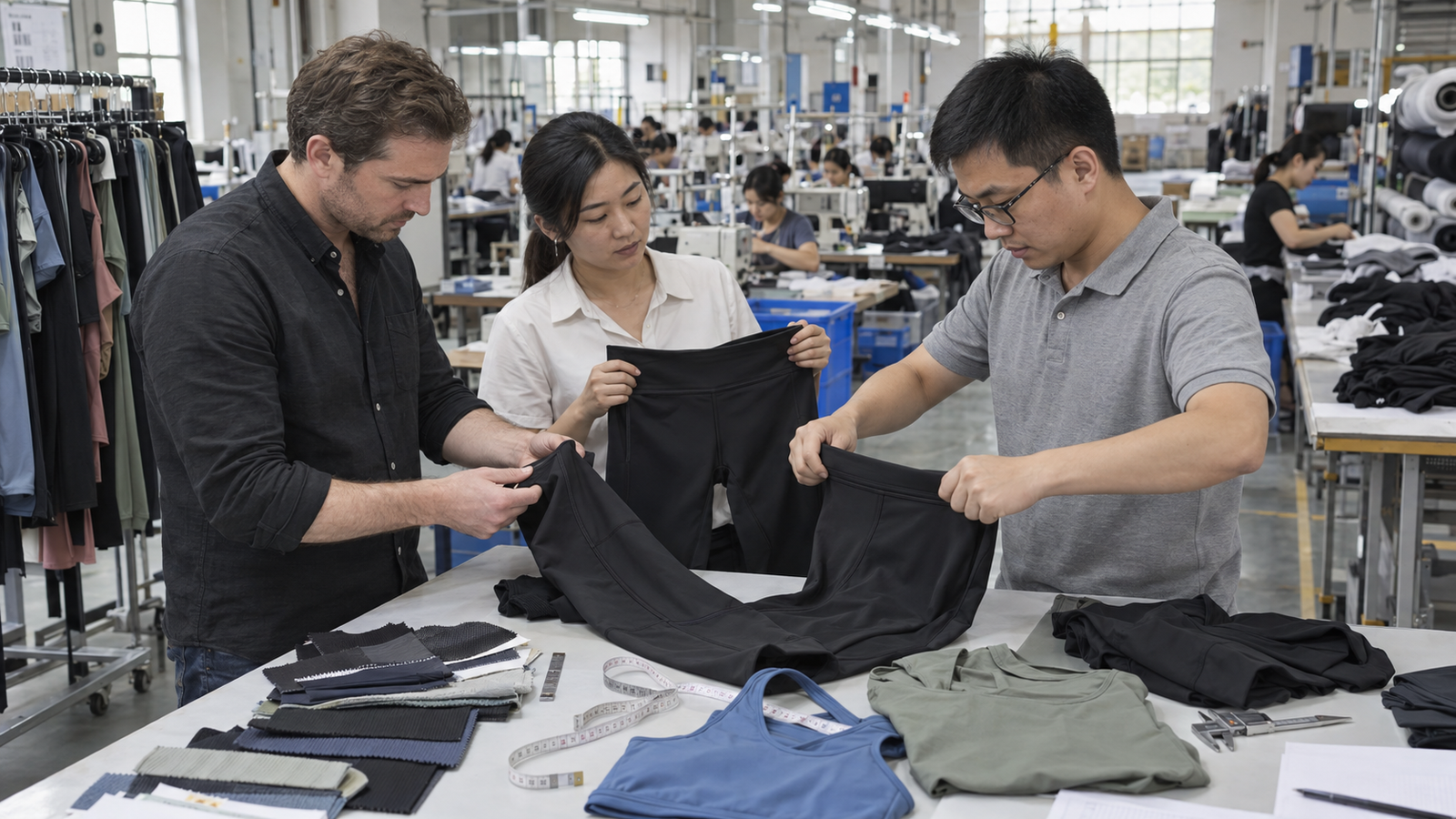
A custom sportswear manufacturer in China can help you launch activewear faster, but the wrong partner can create sizing issues, delayed shipments, and quality complaints. I have seen buyers get excited by low quotes, then struggle with poor fabric recovery or weak stitching. The solution is a clear supplier evaluation process before you place a bulk order.
To find a reliable custom sportswear manufacturer in China, I recommend checking factory experience, OEM/ODM capability, fabric sourcing, sampling process, quality control, certifications, MOQ, communication speed, and production capacity. A strong supplier should show real product examples, offer clear development steps, and support third-party verification before mass production.
I like to treat supplier selection like a product development project, not just a price search. When I slow down and check the right details early, I usually avoid bigger problems later. Let’s walk through the main points I would review before choosing a factory.
Why Does Choosing a Custom Sportswear Manufacturer in China Affect Your Brand Risk?
A cheap supplier can look attractive at first. But sportswear has many hidden quality details, such as stretch recovery, seam strength, color fastness, and size grading[^1]. If one part fails, your buyers may blame your brand, not the factory.
A custom sportswear manufacturer in China affects your brand risk because the factory controls fabric selection, pattern accuracy, sewing quality, labels, packaging, and delivery timing. A reliable supplier helps reduce returns, complaints, shipment delays, and compliance problems[^2] by following documented production and quality control steps.
Sportswear Is More Technical Than It Looks
I always remind buyers that activewear is not just “clothing with stretch.” A pair of yoga leggings, a sports bra, or a running top must move with the body. The fabric must stretch, recover, breathe, and stay comfortable after washing[^3].
For B2B buyers, this means factory selection should not only focus on the unit price. I would also check whether the supplier understands:
- 4-way stretch fabric behavior
- Moisture-wicking performance[^4]
- Squat-proof opacity
- Compression levels
- Seam placement for movement
- Size grading for different markets
- Color matching between fabric lots
- Logo durability after washing
A factory that mainly makes basic T-shirts may not understand the technical details of yoga wear or gym clothing. In contrast, an experienced activewear manufacturer should explain fabric GSM, spandex content, stitching methods, and fit testing in simple terms.
Common Risks Buyers Should Watch
| Risk Area | What Can Go Wrong | What I Would Check |
|---|---|---|
| Fabric | Too thin, poor recovery, pilling | Fabric composition, GSM, lab tests |
| Fit | Sizes do not match target market | Size chart, sample fitting, grading |
| Stitching | Seams break during exercise | Stitch type, seam strength test |
| Color | Bulk color differs from sample | Lab dips, fabric batch control |
| Compliance | Documents are missing or outdated | OEKO-TEX®, REACH, AZO test reports[^5] |
| Delivery | Shipment misses launch window | Production schedule, capacity, QC plan |
At Dongguan Pro Sportswear, we focus on OEM/ODM sportswear manufacturing, not retail sales. In my experience, buyers usually feel more confident when the supplier can show a clear development flow: design discussion, fabric selection, pattern making, sample approval, pre-production sample, bulk production, inspection, and shipment.
That process does not remove every risk. But it makes risks visible before they become expensive.
What Should You Check Before Contacting a Custom Sportswear Manufacturer in China?
Many buyers contact factories too early. They send a vague message like “I need leggings, please quote.” Then they receive random prices that are hard to compare. I prefer to prepare a simple brief first, because better inputs usually create better supplier responses.
Before contacting a custom sportswear manufacturer in China, I would prepare your product type, target market, fabric preference, size range, logo method, order quantity, packaging needs, reference photos, and expected launch date. These details help the factory quote more accurately and recommend realistic production options[^6].
Build a Simple Product Brief
You do not need a perfect tech pack at the beginning. But you should give the factory enough information to understand your project. When I receive a clear brief, I can usually reply with better fabric suggestions, better MOQ options, and a more realistic timeline.
A basic product brief can include:
-
Product category
Example: high-waist yoga leggings, sports bra, gym tank, tennis skirt, golf shirt, modest activewear set. -
Target customer
Example: women’s yoga studio market, gymwear brand, Amazon activewear seller, wholesale distributor. -
Fabric direction
Example: nylon/spandex, polyester/spandex, brushed feel, ribbed texture, compression fabric, lightweight summer fabric. -
Design details
Example: pockets, front seam or no front seam, thumbholes, mesh panels, zipper, removable pads. -
Branding needs
Example: heat transfer logo, woven label, printed neck label, hangtag, barcode sticker, custom polybag. -
Quantity plan
Example: 50–100 pieces trial order, 500 pieces per color, 3,000 pieces bulk order. -
Compliance market
Example: EU, US, UK, Australia, Middle East.
Ask Questions That Reveal Real Capability
I like direct questions because they quickly separate trading companies, small workshops, and real OEM/ODM manufacturers. A few useful questions include:
- Do you have experience with yoga wear, gymwear, tennis wear, or swimwear?
- Can you support both standard styles and fully custom development?
- What is your usual sample lead time?
- What is your bulk production lead time after sample approval?
- Do you offer fabric sourcing and testing support?
- Can I verify your factory audit or certification documents?
- What inspections do you perform before shipment?
- Can you support low MOQ trial orders before larger production?
Compare Suppliers Fairly
If you want accurate comparison, I suggest sending the same brief to each supplier. Otherwise, one factory may quote a basic fabric while another quotes a premium fabric. The cheaper option may not be cheaper in a real product-to-product comparison.
Here is a simple comparison table I would use:
| Supplier Item | Factory A | Factory B | Factory C |
|---|---|---|---|
| Sample cost | |||
| Sample lead time | |||
| MOQ per style/color | |||
| Fabric type | |||
| Logo method | |||
| Bulk lead time | |||
| QC process | |||
| Certifications available | |||
| Communication speed |
This makes the decision less emotional. It also helps you avoid choosing only by the lowest unit price.
How Do You Verify Product Quality and Certifications?
A supplier may say, “Our quality is good,” but that sentence does not prove much. I prefer evidence. For sportswear, buyers should review samples, test reports, inspection steps, and factory processes before approving mass production.
You verify product quality and certifications by checking physical samples, fabric test results, factory audit documents, production SOPs, inspection reports, and third-party certificates. For application-specific claims, I recommend qualified professional evaluation and independent testing, especially for regulated markets or large-volume procurement.
Start With Samples, Not Promises
A sample tells you more than a catalog photo. I would check the sample in normal use conditions. If it is leggings, squat in them. If it is a sports bra, check support and strap comfort. If it is a jacket, test the zipper, cuffs, and seams.
For activewear samples, I usually check:
- Fabric hand feel
- Stretch and recovery
- Opacity under movement
- Seam smoothness
- Thread trimming
- Logo placement
- Size measurement
- Color accuracy
- Wash performance
- Packing presentation
If a sample fails, the supplier’s response matters. A good factory should explain the reason and suggest a correction. For example, they may recommend a higher GSM fabric, stronger stitching, adjusted pattern tension, or a different logo process.
Understand Common Certification Documents
Our business context includes factory and product documentation related to TüV Rheinland, SGS, OEKO-TEX®, ISO9001, CE, SC, AZO, REACH, PFAS, RoHS, and green product standards. However, I always tell buyers to verify certificates directly[^7] and check whether the document applies to the factory, the fabric, the finished garment, or a specific production batch.
This distinction matters:
| Document Type | What It May Show | What Buyers Should Verify |
|---|---|---|
| Factory audit | Factory conditions and management | Valid date, audit scope, company name |
| ISO9001 | Quality management system | Certification body, validity, scope |
| OEKO-TEX® | Textile safety testing | Product class, certificate number |
| REACH / AZO | Chemical safety compliance | Test item, fabric batch, lab name |
| SGS / TüV report | Third-party testing or audit | Report date, tested material, result |
| PFAS-related test | Restricted substance status | Test method and detection limits |
I do not recommend relying only on screenshots. I recommend asking for full documents and, when needed, verifying them with the issuing body or a third-party inspection company.
Use Inspections Before Shipment
For bulk orders, quality control should not happen only at the end[^8]. A strong custom activewear supplier should check quality at several stages:
- Material inspection before cutting
- Cutting inspection for panel accuracy
- Inline inspection during sewing
- Measurement inspection during production
- Final inspection before packing
- Packing inspection before shipment
At Dongguan Pro Sportswear, our stated quality process includes appearance checks, size measurement, elasticity tests, seam strength checks, wash resistance testing, abrasion and deformation checks, and stretch recovery evaluation. I would still encourage buyers to define inspection standards in writing before production begins.
This keeps expectations clear for both sides.
What Production Capabilities Should a Custom Sportswear Manufacturer in China Offer?
Some factories can only copy basic styles. Others can support original design, pattern making, fabric matching, sampling, and scalable production. If you are building a long-term activewear brand, I would look for deeper OEM/ODM ability, not just sewing capacity.
A reliable custom sportswear manufacturer in China should offer design support, fabric sourcing, sample development, pattern making, logo customization, size grading, production planning, quality control, and export packaging. For growing brands, scalable capacity and responsive development support are just as important as the first quotation.
Look for Real OEM/ODM Support
OEM means the factory produces based on your design or specifications. ODM means the factory can help develop designs, patterns, fabrics, and product concepts.[^9] Many sportswear buyers need a mix of both.
I would ask whether the supplier can support:
- Original style development
- Reference sample improvement
- Fabric and trim sourcing
- Digital or paper pattern making
- Logo and label customization
- Custom color matching
- Custom size charts
- Private packaging
- Bulk production
- Export documentation support
Our team at Dongguan Pro Sportswear includes a 20-person R&D and design team, with designers who have long industry experience. We support yoga wear, gymwear, sports bras, cycling shorts, hoodies, swimsuits, tennis skirts, golf apparel, modest Muslim activewear, and unisex sportswear styles.
Equipment and Capacity Matter
Modern cutting and sewing equipment can improve consistency. For example, CNC auto cutting machines help improve cutting accuracy and efficiency[^10]. This matters because uneven cutting can create size variation, twisted seams, and poor fit.
In our business context, we operate factory production with around 15,000㎡ of factory area, about 150 employees, and monthly capacity up to 200,000 pieces depending on product complexity and order schedule. These numbers are useful for buyers, but I still recommend checking current capacity before placing urgent or seasonal orders.
Production capability should match your order type:
| Buyer Type | Best Supplier Capability |
|---|---|
| Startup brand | Low MOQ, sampling support, design advice |
| Distributor | Stable wholesale production, fast repeat orders |
| E-commerce seller | Trend response, packaging, barcode support |
| Established brand | Strong QC, compliance documents, scalable capacity |
| Importer | Certification support, inspection records, shipment planning |
Check Product Category Experience
A yoga leggings factory may not be the best swimwear factory. A hoodie supplier may not understand sports bra support. I would ask for similar products the factory has made before, while respecting customer confidentiality.
Useful proof can include:
- Product photos from the factory showroom
- Fabric swatch books
- Sample racks
- Process videos
- Measurement reports
- Bulk order case examples
- Production line photos
- Packaging examples
A reliable custom sportswear supplier should not hesitate to explain what they do well. They should also be honest about what they do not specialize in. I trust that honesty more than a supplier who says “yes” to every product.
How Should You Compare Price, MOQ, Sampling, and Lead Time?
Price matters. I understand that. But the lowest price can become expensive if you need remakes, refunds, or air freight because of delays. I prefer to compare the full landed value, not just the FOB unit cost.
When comparing a custom sportswear manufacturer in China, I would review unit price, fabric quality, MOQ, sample fee, development time, bulk lead time, defect policy, packaging cost, payment terms, and shipping method. A balanced offer should support your launch plan, quality target, and cash flow.
Understand What Drives Price
Sportswear pricing depends on more than labor. Fabric is often a major cost driver[^11], especially for nylon/spandex, recycled fibers, ribbed fabric, brushed fabric, and high-compression materials.
Common cost factors include:
- Fabric composition and weight
- Dyeing and color matching
- Pattern complexity
- Number of seams
- Stitch type
- Logo process
- Padding or accessories
- Custom labels
- Packaging
- Order quantity
- Inspection requirements
- Shipping terms
For example, a simple polyester/spandex tank top will not cost the same as a high-compression seamless-look legging with pockets, no front seam, custom waistband, heat-transfer logo, and individual retail packaging.
MOQ Should Match Your Stage
Many new brands want low MOQ because they need to test the market. That is reasonable. In our business context, we support small trial orders from around 50–100 pieces depending on the product, fabric, and customization requirements. Larger orders usually allow better unit pricing because fabric purchasing and production setup become more efficient.[^12]
Here is a practical way to think about MOQ:
| Order Stage | Suggested Goal | What to Prioritize |
|---|---|---|
| First sample | Confirm fit and fabric | Accuracy and feedback |
| Trial order | Test market demand | Lower MOQ and speed |
| Repeat order | Improve best sellers | Stable quality |
| Bulk order | Scale profitably | Cost, capacity, QC |
| Seasonal launch | Coordinate many SKUs | Planning and timeline |
Sampling and Lead Time Need Clear Approval Steps
A typical custom sportswear project may include:
- Design discussion: 1–3 days
- Fabric sourcing: 2–7 days
- Pattern and sample making: 7–15 days
- Sample review and revision: 5–15 days
- Pre-production confirmation: 2–5 days
- Bulk production: often 20–45 days, depending on order size
- Final inspection and packing: 2–5 days
These timelines vary. Peak season, fabric availability, printing method, and order complexity can change the schedule. I always suggest adding buffer time before a product launch.
Do Not Compare Price Without Specs
If one supplier quotes $6.80 and another quotes $8.20, the $6.80 option may look better. But if the cheaper quote uses thinner fabric, weaker elastic, lower-grade stitching, or no proper QC, the comparison is not fair.
I would ask each supplier to confirm:
- Fabric composition
- Fabric GSM
- Size range
- Color quantity
- Logo method
- Packaging details
- Inspection standard
- Incoterms
- Payment terms
- Production lead time
Clear specs protect both buyer and supplier. They also make future reorders easier.
How Can Communication Show Whether a Supplier Is Reliable?
A factory can have good machines but poor communication. That still creates problems. If the supplier replies slowly, avoids details, or changes answers often, I would treat that as an early warning sign.
Reliable supplier communication is clear, timely, specific, and documented. A strong manufacturer should ask smart questions, confirm technical details, explain trade-offs, send progress updates, and keep records of approvals. Good communication reduces mistakes during sampling, production, inspection, and shipping.
Good Suppliers Ask Questions
When a buyer sends a design photo, I do not think the best answer is only “yes, we can make it.” A better supplier asks questions like:
- What fabric feeling do you want?
- What compression level do you prefer?
- Which market size standard should we follow?
- Do you need removable bra pads?
- Should the logo survive repeated washing?
- Do you need individual polybags or custom boxes?
- Do you have a target price range?
These questions show experience. They also prevent wrong assumptions.
Keep Everything Written
I like WeChat, WhatsApp, and email for quick communication. But for important approvals, I always recommend written records. Buyers should confirm the final details in a purchase order, spec sheet, or production confirmation document.
Important items to document include:
- Final sample version
- Approved measurements
- Fabric code and color
- Logo size and position
- Label placement
- Packaging method
- Quantity by size and color
- Inspection standard
- Delivery date
- Payment terms
Watch for Red Flags
I would be careful if a supplier:
- Refuses to make samples
- Cannot explain fabric details
- Gives very low prices without specs
- Avoids certification verification
- Pushes for full payment too early
- Cannot show factory or production evidence
- Says every product is “no problem”
- Changes MOQ or price many times without reason
A reliable custom sportswear manufacturer in China should make the process feel more organized, not more confusing. When communication is professional from the first conversation, production is usually smoother later.
Frequently Asked Questions
What is the typical MOQ for custom sportswear manufacturing in China?
MOQ depends on the style, fabric, color, and customization. Some factories require several hundred pieces per style or color. In our case, we can support small trial orders around 50–100 pieces for suitable projects, while bulk orders usually receive better pricing and production efficiency.
How long does it take to develop a custom activewear sample?
A custom activewear sample often takes 7–15 days after design details and fabric direction are confirmed. More complex styles, custom dyed fabrics, special trims, or multiple revisions can take longer. I recommend planning extra time for fitting, washing tests, and final approval.
Should I choose OEM or ODM sportswear manufacturing?
You should choose OEM if you already have complete designs, tech packs, and specifications. You should choose ODM if you need help with style development, fabric selection, pattern making, or market-ready product ideas. Many growing brands use both services at different stages.
How can I verify a sportswear factory’s certifications?
You can ask for full certification documents, check validity dates, confirm the certified company name, and verify certificate numbers with the issuing body when possible. For large or regulated orders, I recommend using third-party testing or inspection services before shipment.
What products can Dongguan Pro Sportswear manufacture?
We manufacture yoga leggings, sports bras, gym tops, jackets, hoodies, cycling shorts, tennis skirts, golf apparel, swimwear, modest sportswear, and full activewear sets. We focus on B2B OEM/ODM production, wholesale manufacturing, private label support, and bulk custom sportswear development.
Conclusion
Finding a reliable custom sportswear manufacturer in China is not only about getting the lowest quote. I would check factory experience, product samples, fabric quality, certifications, MOQ, lead time, communication, and quality control before making a decision. A good supplier should help you reduce risk and build products your customers can trust. If you need OEM/ODM yoga wear, gymwear, or activewear manufacturing support, you can contact Dongguan Pro Sportswear at justin@purongsports.com or +86 136 3017 0657 to discuss your project.
[^1]: "Advancements in functional smart and wearable textiles for ...", https://pmc.ncbi.nlm.nih.gov/articles/PMC12716241/. Textile testing standards and apparel quality literature treat stretch recovery, seam strength, colorfastness, and dimensional or fit control as measurable properties relevant to garment performance and durability. Evidence role: general_support; source type: institution. Supports: Textile testing bodies and apparel research identify stretch recovery, seam strength, colorfastness, and size or fit control as measurable quality attributes for apparel and performance textiles.. Scope note: Such sources support the relevance of these quality factors generally, but they do not prove that any specific manufacturer controls them effectively. [^2]: "Strategic implications and the paradox of AI inspection", https://www.ceibs.edu/sites/portal.prod1.dpmgr.ceibs.edu/files/2025%20DSJ%20AI.pdf. Research on supplier quality management and quality-management systems indicates that documented process controls and inspection procedures are associated with improved conformity and reduced defect-related risk. Evidence role: general_support; source type: research. Supports: Quality management and supply-chain research associates documented quality processes with improved process control, fewer defects, and better supplier performance.. Scope note: The evidence is contextual because it supports the general relationship between quality systems and risk reduction rather than quantifying return or complaint reductions for custom sportswear. [^3]: "Advancements in functional smart and wearable textiles for sportswear ...", https://pmc.ncbi.nlm.nih.gov/articles/PMC12716241/. Textile science studies of sportswear comfort identify elasticity and recovery, moisture or air transport, and durability after laundering as factors affecting wearer comfort and garment performance. Evidence role: mechanism; source type: paper. Supports: Textile research explains that sportswear comfort and performance are influenced by elasticity, recovery, moisture and air transport, and laundering durability.. Scope note: The support is general to sportswear textiles and does not establish the exact performance threshold required for every activewear product. [^4]: "Advancements in functional smart and wearable textiles for ...", https://pmc.ncbi.nlm.nih.gov/articles/PMC12716241/. Studies of moisture-management textiles report that wicking and liquid transport properties influence thermophysiological and sensorial comfort in sportswear during activity. Evidence role: mechanism; source type: paper. Supports: Research on moisture-management textiles explains how wicking and liquid transport affect perceived comfort during physical activity.. Scope note: The evidence supports the importance of wicking as a design factor, not the performance of any particular fabric offered by a supplier. [^5]: "[PDF] Comparative Analysis of Azo Dye Restriction in the International ...", https://scholarworks.uark.edu/cgi/viewcontent.cgi?article=1017&context=ampduht. European chemical regulations and textile safety certification schemes address restricted substances in textile products, including certain azo dyes and other chemicals relevant to apparel compliance. Evidence role: general_support; source type: government. Supports: Regulatory and certification sources show that REACH restrictions, azo dye limits, and textile harmful-substance testing are relevant to textile products placed on regulated markets.. Scope note: These sources establish regulatory and testing relevance, but certificate applicability still depends on the product, material, batch, issuing body, and target market. [^6]: "a study on lead time management in garments industry - Academia.edu", https://www.academia.edu/145106488/A_STUDY_ON_LEAD_TIME_MANAGEMENT_IN_GARMENTS_INDUSTRY. Apparel product-development materials describe technical specifications and product briefs as inputs for costing, material selection, sampling, and production planning. Evidence role: general_support; source type: education. Supports: Apparel product-development guidance explains that technical specifications, materials, measurements, and construction details are used for costing and production planning.. Scope note: The support is process-based and does not guarantee that every supplier will quote accurately after receiving a brief. [^7]: "IAF CertSearch: IAF Certification Validation", https://www.iafcertsearch.org/. Accreditation and certification bodies advise users to verify certificate validity, scope, holder identity, and issuing body, often through official certificate or accreditation databases. Evidence role: general_support; source type: institution. Supports: Accreditation and certification bodies provide certificate-verification tools or guidance and emphasize checking certificate validity, scope, and issuing body.. Scope note: This supports the verification practice generally; it does not validate any specific certificate mentioned by a supplier. [^8]: "The Ultimate Guide to Quality Inspection in Manufacturing", https://www.6sigma.us/manufacturing/quality-inspection/. Quality-management guidance emphasizes process monitoring, in-process controls, and inspection activities during production as mechanisms for detecting and correcting nonconformities before final release. Evidence role: expert_consensus; source type: institution. Supports: Quality-management guidance supports monitoring and control during production, not only final inspection, to detect nonconformities earlier.. Scope note: The evidence supports the quality-control principle broadly and does not specify the optimal inspection frequency for each sportswear order. [^9]: "Original design manufacturer - Wikipedia", https://en.wikipedia.org/wiki/Original_design_manufacturer. Reference definitions distinguish OEM production, which is generally associated with manufacturing to another firm’s specifications, from ODM production, where the manufacturer contributes product design or development. Evidence role: definition; source type: encyclopedia. Supports: Reference sources distinguish original equipment manufacturing from original design manufacturing by the extent of design and development responsibility.. Scope note: Definitions vary by industry and contract, so a buyer should confirm the exact responsibilities in the supplier agreement. [^10]: "Comparative Study on Automatic Fabric Cutting Machine ...", https://www.academia.edu/96795707/Comparative_Study_on_Automatic_Fabric_Cutting_Machine_and_Straight_Knife_Cutting_Machine. Studies of computerized fabric-cutting systems in apparel manufacturing report that automated cutting can improve cutting consistency, accuracy, and production efficiency compared with manual cutting under suitable operating conditions. Evidence role: mechanism; source type: paper. Supports: Research on computerized or automated cutting in apparel manufacturing discusses improvements in cutting precision, material utilization, and production efficiency.. Scope note: The evidence supports the capability of the technology generally, not the performance of any particular factory’s equipment or operators. [^11]: "(PDF) Critical Analysis of Material Consumption and Cost ...", https://www.academia.edu/87069605/Critical_Analysis_of_Material_Consumption_and_Cost_Reduction_Techniques_for_the_Apparel_Cutting_Processes. Apparel costing literature identifies fabric and other materials as central components of garment cost, alongside labor, trims, overhead, compliance, packaging, and logistics. Evidence role: general_support; source type: education. Supports: Apparel costing references identify fabric and materials as major inputs in garment cost calculation.. Scope note: The relative share of fabric cost varies by garment type, fiber, fabric construction, order size, and supplier pricing model. [^12]: "Economic order quantity - Wikipedia", https://en.wikipedia.org/wiki/Economic_order_quantity. Production economics research explains that average unit cost can decline with higher production volume when fixed setup costs, procurement costs, or learning effects are distributed across more units. Evidence role: mechanism; source type: research. Supports: Production economics literature explains that fixed setup costs and purchasing efficiencies can reduce average unit costs as production volume rises.. Scope note: This is a general economic mechanism; actual apparel pricing also depends on capacity, materials, labor, quality requirements, and supplier negotiation.