
How to Start an Activewear Brand: From Idea to Production
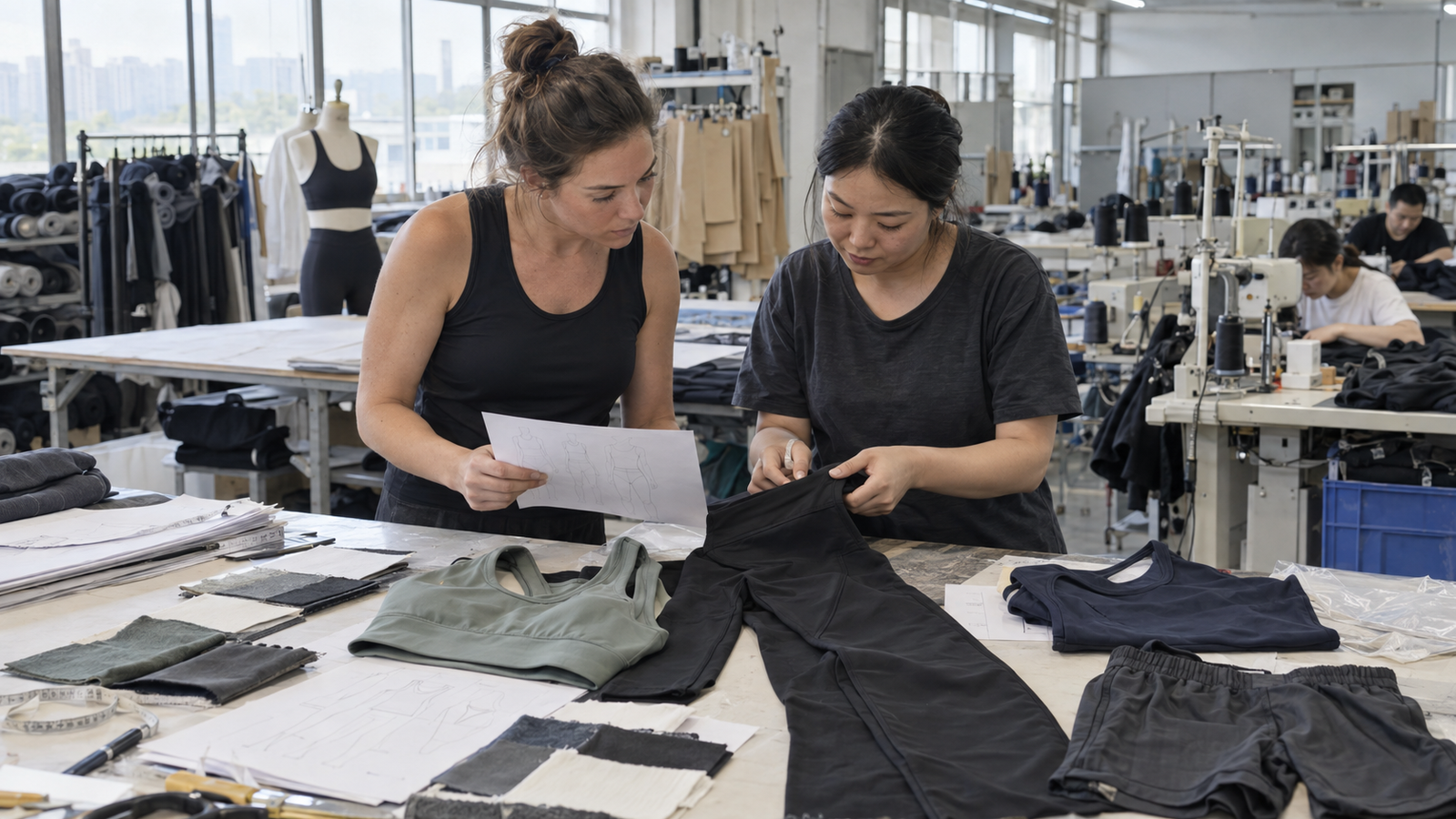
How to start an activewear brand can feel confusing when you move from a design idea to real production. You may have sketches, market inspiration, or a Shopify plan, but one wrong supplier choice can waste time and money[^1]. The solution is to treat your brand launch as a step-by-step product development project.
To start an activewear brand, define your niche, choose your first product range, confirm fabrics and fit, create tech packs, develop samples, verify your manufacturer, and only then move into bulk production. A strong launch usually starts small, tests demand, and builds reliable OEM/ODM supply before scaling.
I have seen many new buyers focus on logos and colors first. Those details matter, but they come later. The real foundation is product clarity, supplier reliability, quality control, and a launch plan that matches your budget.
How do I start an activewear brand with a clear market position?
Many founders want to sell “activewear for everyone.” That sounds flexible, but it usually creates weak products and unclear marketing. If you try to serve every customer, your designs, fabrics, sizes, and price points become hard to control.
A clear market position helps you start an activewear brand with fewer mistakes.[^2] You need to define your target customer, sport category, price level, fit preference, and visual identity before sampling. This gives your manufacturer better direction and helps buyers understand why your collection exists.
Start with one customer, not one product
I always recommend that new brands describe the customer before describing the leggings. For example, “women aged 25–35 who practice yoga three times a week and want soft, sculpting sets” is more useful than “high-quality yoga wear.”
A strong customer profile can include:
- Main activity: yoga, gym training, running, tennis, golf, pilates, or athleisure
- Fit preference: compressive, buttery soft, relaxed, modest, cropped, high-waisted
- Price level: entry, mid-market, premium, or luxury
- Region: United States, Europe, Middle East, Southeast Asia, Australia
- Lifestyle: studio workouts, outdoor running, travel, casual daily wear
This decision affects almost everything. A yoga line may need high-stretch nylon-spandex fabric with a soft hand feel.[^3] A running line may need lighter fabric, quick-dry performance, reflective details, and stronger seams.[^4] A modest activewear collection may require longer tops, head coverings, looser cuts, and breathable coverage.
Choose a small first collection
Many first-time founders want to launch 20 styles. I understand the excitement, but I usually suggest a tighter first drop. A focused collection is easier to sample, photograph, quality check, and reorder.[^5]
A practical first activewear collection could include:
| Brand Direction | Starter Products | Why It Works |
|---|---|---|
| Yoga brand | Sports bra, high-waist leggings, crop jacket | Easy to build matching sets |
| Gym brand | Shorts, tank top, compression leggings | Strong demand and repeat purchase |
| Modest activewear | Long-sleeve top, loose pants, sports hijab | Clear niche and less direct competition |
| Tennis/golf brand | Skirt, polo shirt, dress | Good for premium positioning |
| Athleisure brand | Hoodie, joggers, casual sports bra | Easy daily wear appeal |
Define your point of difference
Your activewear brand does not need to invent something completely new. However, it does need a reason to exist. That reason can be:
- Better fit for a specific body type
- Eco-conscious fabric options, with documents buyers should verify
- Distinct color palettes
- Modest or inclusive sizing
- Premium fabric hand feel
- Lower minimum order quantities for test launches
- A strong community around one sport or lifestyle
When I review a new activewear concept, I like to ask one simple question:
“If this product had no logo, would the customer still understand the brand?”
If the answer is yes, the brand direction is probably strong enough to move into product development.
How do I choose products and fabrics to start an activewear brand?
The wrong fabric can ruin a good design. It may pill, show sweat, become transparent, lose recovery, or feel uncomfortable during movement.[^6] This problem becomes more serious when you produce in bulk because small sample issues can become large inventory problems.
To choose products and fabrics, match each style to its activity, stretch level, opacity, weight, hand feel, and recovery requirements. For activewear, buyers usually evaluate nylon-spandex, polyester-spandex, cotton blends, rib fabrics, mesh, and performance knits based on function and target price.
Understand common activewear fabrics
Fabric choice is one of the most important decisions when you start an activewear brand. It affects comfort, appearance, cost, performance, and customer reviews.
Here is a simple comparison:
| Fabric Type | Common Use | Strengths | Watch Points |
|---|---|---|---|
| Nylon-spandex | Yoga leggings, sports bras | Soft, stretchy, premium feel | Usually higher cost |
| Polyester-spandex | Running tops, gym wear | Durable, quick-dry, colorfast | May feel less soft |
| Rib knit | Fashion activewear, sets | Trendy texture, good stretch | Can grow if recovery is weak |
| Cotton blend | Athleisure, casual sportswear | Comfortable, natural feel | Slower drying |
| Mesh | Panels, ventilation zones | Breathable, sporty look | Needs careful seam finishing |
Test more than appearance
A fabric may look beautiful on a sample hanger, but activewear must perform on the body. I like to evaluate fabric with a few simple questions:
- Does it become sheer during a squat test?
- Does it recover after stretching?
- Does it feel stable after washing?
- Does the color rub off when wet or dry?
- Does it match the target market price?
Professional labs can test colorfastness, pilling, shrinkage, harmful substances, and other compliance items.[^7] If you sell in regulated markets, you should ask your supplier for test reports and verify them. Certifications such as OEKO-TEX®, SGS, TÜV Rheinland, REACH[^8], or similar documents should be treated as documents to review, not just marketing words.
Match fabric to product function
A high-waisted yoga legging may need a different fabric from a running short. For yoga, the customer often wants softness, stretch, opacity, and comfort. For running, the customer may value moisture management, light weight, and ventilation. For gym training, the product may need abrasion resistance and stable compression.
For example, in our OEM/ODM manufacturing context, I often see buyers request “buttery soft” fabric for yoga sets. That can work very well, but I still suggest checking recovery and pilling performance. A fabric that feels soft on day one should also hold shape after repeated wear.
Good fabric development is a balance between:
- Performance
- Price
- Color availability
- Minimum order quantity
- Lead time
- Compliance documents
- Customer expectation
If you are unsure, ask your manufacturer for several fabric swatches with weight, composition, stretch direction, and suggested use. This makes comparison much easier.
How do I start an activewear brand with OEM/ODM sampling?
Sampling is where your idea becomes a real product. It is also where many hidden problems appear. If the tech pack is unclear, the first sample may have the wrong fit, wrong fabric, wrong stitching, or wrong logo placement.
You can start an activewear brand with OEM/ODM sampling by preparing reference images, size specs, fabric preferences, logo files, color ideas, and target price. The supplier then develops patterns, samples, and revisions before you approve a pre-production sample for bulk manufacturing.
Know the difference between OEM and ODM[^9]
Many new buyers use OEM and ODM in the same way, but they are different.
| Model | What It Means | Best For |
|---|---|---|
| OEM | You provide the design, supplier manufactures it | Brands with clear tech packs |
| ODM | Supplier helps develop or adapt designs | Startups needing design support |
| Private label | Existing product with your branding | Fast test launches |
| Full custom | New pattern, fabric, trims, packaging | Brands with unique positioning |
If you already have a detailed design, OEM production may be enough. If you only have a mood board, ODM support is usually more helpful. In our business context, we support both approaches for yoga wear, gym wear, sports bras, active jackets, tennis skirts, golf apparel, modest sportswear, and related activewear categories.
Prepare a simple but useful tech pack
A tech pack does not need to be perfect at the first stage, but it must be clear. At minimum, it should include:
- Front and back design images
- Fabric composition or fabric reference
- Color references, such as Pantone numbers if available
- Size chart or sample size measurements
- Logo placement and logo method
- Stitching details
- Trim details, such as zippers, drawcords, labels, and pads
- Packaging requests
- Target order quantity
I have received rough sketches that became strong products because the buyer had clear priorities. I have also seen beautiful design files fail because they missed basic measurement information. Clarity matters more than decoration.
Plan for sample revisions
Most activewear samples need at least one revision. This is normal. Fit is especially sensitive because sportswear must move with the body.[^10] A leggings sample may need waistband adjustment. A sports bra may need better support. A jacket may need sleeve length changes.
A typical sampling process looks like this:
- Design review
- Fabric and trim confirmation
- Pattern making
- First sample production
- Fit review and comments
- Second sample or corrected sample
- Pre-production sample approval
The pre-production sample is very important. It becomes the reference for bulk production. I recommend that buyers keep one approved sample and ask the manufacturer to keep one approved sample too. This reduces disputes during quality inspection.
Sampling is not just a cost. It is a risk-control tool. A careful sample process can prevent thousands of defective pieces later.
How do I evaluate a manufacturer when I start an activewear brand?
A low unit price can look attractive at first. However, the cheapest supplier may become expensive if the fabric is unstable, delivery is late, stitching is poor, or communication is slow. Supplier selection is one of the biggest decisions in your launch.
You should evaluate an activewear manufacturer by checking production experience, product category fit, factory capacity, sampling ability, quality control process, certifications, communication speed, and order flexibility. Always request samples, factory information, and verifiable documents before placing a bulk order.
Check category experience
Not every clothing factory understands activewear. Sportswear requires stretch fabric handling, accurate cutting, secure seams, and fit control. A factory that makes woven shirts may not be the best choice for compression leggings or sports bras.
Useful questions include:
- How many years have you produced activewear?
- What are your main product categories?
- Can you make yoga leggings, sports bras, jackets, shorts, or tennis skirts?
- Do you support OEM, ODM, and private label orders?
- What is your monthly capacity?
- What is your minimum order quantity?
- Can you support small trial orders before larger production?
In our case, Dongguan Pro Sportswear has 12 years of sportswear OEM/ODM manufacturing experience and focuses on B2B custom production. Our business context includes yoga wear, fitness apparel, athleisure sets, tennis and golf apparel, swimwear, and modest sportswear. Buyers should still review samples and confirm documents for their own markets.
Review quality control systems
Quality control should not happen only at the end. It should happen at several stages.[^11]
A practical QC process includes:
| Stage | What to Check |
|---|---|
| Fabric inspection | Color, weight, defects, stretch |
| Cutting inspection | Size accuracy, fabric direction |
| Sewing inspection | Stitch quality, seam strength |
| Mid-line inspection | Workmanship during production |
| Final inspection | Measurements, labels, packaging, appearance |
| Performance checks | Stretch recovery, washing, pilling, colorfastness if required |
For activewear, I pay close attention to seam strength, waistband elasticity, fabric opacity, and measurement tolerance. Small differences can affect customer comfort. For example, a waistband that is 1.5 cm too tight may create complaints even if the fabric is good.
Verify documents and compliance
If your market requires specific safety or environmental standards, you should verify supplier documents. Some buyers ask for OEKO-TEX®, REACH, AZO-free, PFAS-related information, SGS reports, TÜV Rheinland-related documents, ISO9001, or other certificates. These documents should be checked by the buyer or a qualified professional, especially for regulated markets.
A good supplier should be willing to provide available documents, explain limitations, and support reasonable testing. However, no supplier should replace your legal or compliance advisor. If you sell into the EU, US, UK, or other strict markets, I suggest professional review for application-specific decisions.
Evaluate communication
Good communication is part of manufacturing quality. A reliable supplier should:
- Reply clearly
- Ask useful questions
- Warn you about risks
- Confirm details in writing
- Explain lead times honestly
- Provide photos or videos when needed
- Keep sample and production records
When you start an activewear brand, you need a supplier who can help you prevent problems, not just quote prices.
How do I move from approved sample to bulk production?
Bulk production is exciting, but it also brings pressure. Once fabric is purchased and cutting begins, changes become expensive. If you rush this stage, you may face wrong colors, wrong labels, size issues, or delayed shipments.
To move into bulk production, confirm the pre-production sample, purchase order, size ratio, colorways, labels, packaging, inspection standard, payment terms, and delivery schedule. Then monitor fabric, cutting, sewing, finishing, and final inspection before shipment.
Confirm every detail before cutting
Before production starts, I like to make a final checklist. This sounds simple, but it prevents many problems.
Your bulk production checklist should include:
- Approved pre-production sample
- Final tech pack
- Final fabric and color approval
- Size breakdown
- Label and hangtag artwork
- Logo method, such as heat transfer, embroidery, or screen print
- Packaging requirements
- Carton marks
- Quality inspection standard
- Shipping method
- Delivery deadline
Logo methods deserve special attention. A heat-transfer logo may look clean on yoga sets, but it should be tested for washing and stretch. Embroidery can look premium, but it may not suit thin stretch fabric. Screen printing can work for some tops, but it needs proper curing and color testing.
Understand common timelines
Timelines vary by product, fabric, order size, and season. Still, a rough activewear production timeline often looks like this:
| Step | Typical Time |
|---|---|
| Fabric sourcing | 3–10 days |
| First sample | 7–15 days |
| Sample revision | 7–12 days |
| Bulk fabric preparation | 10–25 days |
| Cutting and sewing | 15–35 days |
| Finishing and packing | 3–7 days |
| Final inspection | 1–3 days |
| Shipping | Depends on method and destination |
If you have a fixed launch date, work backward. Add buffer time. Fabric delays, holiday schedules, and revision rounds can affect production. I usually tell buyers that a calm timeline produces better results than a rushed one.
Decide how to inspect
For first orders, I recommend a final inspection before shipment. You can inspect by yourself, hire a third-party inspection company, or agree on a supplier inspection report with photos and measurements. For larger orders, third-party inspection is often worth the cost.
Inspection can include:
- Quantity check
- Workmanship check
- Size measurement
- Fabric defects
- Color consistency
- Logo placement
- Label accuracy
- Packaging quality
- Carton condition
Activewear is very fit-sensitive, so measurement tolerance should be agreed in advance. A common tolerance may be around ±1 cm for some garment points, but this depends on the product and buyer standard.
Start small, then reorder better
A first production run is not only about sales. It is also a market test.[^12] You learn which colors sell, which sizes move fastest, which fabric customers prefer, and which product photos convert.
Many brands begin with a small trial order, such as 50–100 pieces per style if the supplier supports it. Then they reorder the best sellers in larger quantities. This approach can protect cash flow and reduce dead stock.
In our manufacturing work, we often support trial orders and larger wholesale production for brand buyers, distributors, importers, and cross-border e-commerce sellers. The best results usually come when the buyer treats the first order as the beginning of a long-term supply chain, not a one-time transaction.
Frequently Asked Questions
How much money do I need to start an activewear brand?
The budget depends on product type, sample rounds, fabric choice, order quantity, branding, photography, website, and shipping. A lean launch may start with a small capsule collection and trial production. I suggest planning for sampling, bulk inventory, packaging, marketing, and inspection costs.
What is the best first product for an activewear brand?
The best first product is usually a style with clear demand and simple coordination, such as leggings, sports bras, shorts, or matching yoga sets. I prefer starting with products that fit your niche and can be reordered easily if customer feedback is strong.
Do I need a tech pack before contacting a manufacturer?
A tech pack helps a lot, but you can contact an ODM manufacturer with reference photos, target fabric, size ideas, and branding needs. The more details you provide, the more accurate the quotation and sample will be. Clear information saves time.
How do I avoid poor quality activewear production?
You can reduce quality risk by approving samples, testing fabrics, confirming measurements, reviewing supplier experience, checking documents, and arranging inspection before shipment. You should also keep written records of all production details, including labels, packaging, colors, and tolerances.
Can I start an activewear brand with small order quantities?
Yes, some manufacturers support small trial orders, especially for startups or market testing. Minimum order quantity depends on fabric, color, customization, and production schedule. In our business context, small trial orders may be possible from around 50–100 pieces, depending on the project.
Conclusion
Learning how to start an activewear brand is easier when you treat the process like product development, not just logo creation. You need a clear niche, suitable fabrics, careful sampling, verified supplier capability, and controlled bulk production. If you are preparing an OEM/ODM activewear project, my team at Dongguan Pro Sportswear can help with design development, sampling, fabric sourcing, custom branding, quality control, and bulk manufacturing. Contact us at justin@purongsports.com or +86 136 3017 0657 to discuss your next collection.
[^1]: "Supplier Selection Problem: Methodology Literature Review", https://scholarworks.lib.csusb.edu/cgi/viewcontent.cgi?article=1149&context=jiim&httpsredir=1&referer=. Supply-chain management research links supplier selection and supplier performance to cost, delivery, and quality outcomes, supporting the claim that an unsuitable supplier can create financial and timing risk. Evidence role: general_support; source type: paper. Supports: Supplier selection affects cost, delivery reliability, and quality outcomes in manufacturing supply chains.. [^2]: "Navigating new product development: Uncovering factors and overcoming ...", https://pmc.ncbi.nlm.nih.gov/articles/PMC10788447/. Marketing scholarship commonly treats segmentation, targeting, and positioning as core planning steps for aligning product attributes and communications with defined customer groups; this supports the article's general argument, though it does not specifically measure error rates in activewear launches. Evidence role: expert_consensus; source type: education. Supports: Marketing education sources describe segmentation, targeting, and positioning as foundational steps for aligning products with customer needs.. Scope note: The support is contextual because it applies general marketing theory rather than activewear-specific launch data. [^3]: "(PDF) Spandex", https://www.academia.edu/42668503/Spandex. Textile research describes elastane-blend fabrics as providing stretch and recovery properties important for close-fitting garments used in movement-based activities; this supports the material rationale for nylon-spandex yoga apparel. Evidence role: mechanism; source type: research. Supports: Textile research explains that elastane-containing fabrics provide stretch and recovery properties useful for garments requiring body movement.. Scope note: The source would explain fabric function generally and may not establish that nylon-spandex is required for every yoga product. [^4]: "Advancements in functional smart and wearable textiles for ...", https://pmc.ncbi.nlm.nih.gov/articles/PMC12716241/. Sportswear research identifies moisture management, garment weight, construction durability, and visibility features as relevant performance considerations for running apparel, although specific requirements vary by climate, distance, and use case. Evidence role: mechanism; source type: research. Supports: Sportswear and visibility research supports moisture-management, lightweight construction, seam durability, and reflective details as relevant to running apparel performance and safety.. Scope note: The support is contextual because it validates the design considerations rather than prescribing a universal specification. [^5]: "Relationship between manufacturing complexity, strategy, and ...", https://pmc.ncbi.nlm.nih.gov/articles/PMC8214087/. Operations-management literature associates greater product variety with higher coordination, inventory, and process complexity, providing contextual support for the claim that a smaller first collection is easier to manage. Evidence role: mechanism; source type: paper. Supports: Research on product variety and operational complexity shows that larger assortments increase coordination, inventory, and production-management burdens.. Scope note: The evidence would support the mechanism generally, not the exact tasks of photographing or reordering activewear styles. [^6]: "An approach to improve the pilling resistance properties of three ... - PMC", https://pmc.ncbi.nlm.nih.gov/articles/PMC8102427/. Textile-performance studies treat pilling resistance, stretch recovery, dimensional stability, opacity, and comfort as measurable fabric properties, supporting the article's warning that unsuitable fabrics can fail in wear. Evidence role: mechanism; source type: paper. Supports: Textile performance literature documents fabric properties such as pilling resistance, dimensional stability, opacity, stretch recovery, and comfort as measurable determinants of garment performance.. [^7]: "Standard Test Methods and Procedures", https://www.aatcc.org/testing/standards. Textile standards bodies publish standardized methods for evaluating colorfastness, pilling, dimensional change, and chemical properties, supporting the statement that laboratory testing can assess these compliance and performance items. Evidence role: general_support; source type: institution. Supports: Recognized standards organizations publish methods for textile colorfastness, pilling, dimensional change, and chemical testing.. [^8]: "Registration, Evaluation, Authorisation and Restriction of ...", https://en.wikipedia.org/wiki/Registration,_Evaluation,_Authorisation_and_Restriction_of_Chemicals. European Union sources define REACH as the regulatory framework for the registration, evaluation, authorization, and restriction of chemicals, providing context for why textile buyers selling into the EU may need to review chemical-compliance documentation. Evidence role: definition; source type: government. Supports: REACH is the European Union framework for registration, evaluation, authorization, and restriction of chemicals, with relevance to substances used in consumer products including textiles.. Scope note: The source would establish regulatory context, while product-specific obligations depend on the garment, substances present, and market role of the seller. [^9]: "Original design manufacturer - Wikipedia", https://en.wikipedia.org/wiki/Original_design_manufacturer. Reference sources distinguish original equipment manufacturing from original design manufacturing, supporting the article's explanation that OEM and ODM involve different levels of supplier design responsibility. Evidence role: definition; source type: encyclopedia. Supports: OEM and ODM refer to distinct manufacturing arrangements, with OEM generally producing to another firm's design and ODM contributing original design or product development.. [^10]: "The Role of Sports Clothing in Thermoregulation, Comfort, and ...", https://pmc.ncbi.nlm.nih.gov/articles/PMC9051004/. Apparel ergonomics research links garment fit and pattern design to mobility and functional comfort, supporting the claim that sportswear fit is sensitive because the garment must move with the body. Evidence role: mechanism; source type: paper. Supports: Apparel ergonomics research connects garment fit, body movement, and functional comfort in sportswear.. [^11]: "Statistical process control", https://en.wikipedia.org/wiki/Statistical_process_control. Quality-management standards emphasize process control, monitoring, and documented checks across production activities, supporting the article's view that quality control should occur before final inspection as well as at shipment. Evidence role: expert_consensus; source type: institution. Supports: Quality-management standards and process-control literature emphasize monitoring and control throughout production processes.. Scope note: The source would support the general quality-management principle rather than prescribe the exact apparel inspection stages listed in the article. [^12]: "Minimum viable product - Wikipedia", https://en.wikipedia.org/wiki/Minimum_viable_product. Entrepreneurship literature on market testing and minimum viable products describes early launches as mechanisms for learning from customer demand and feedback before larger-scale investment, supporting the article's interpretation of a first production run as a market test. Evidence role: general_support; source type: education. Supports: Entrepreneurship and product-development sources describe early market tests and minimum viable products as ways to learn from customer behavior before scaling.. Scope note: The support is conceptual and does not prove that every small apparel production run yields reliable market data.