
Making the Switch to a Halter Sports Bra: A Beginner’s Guide
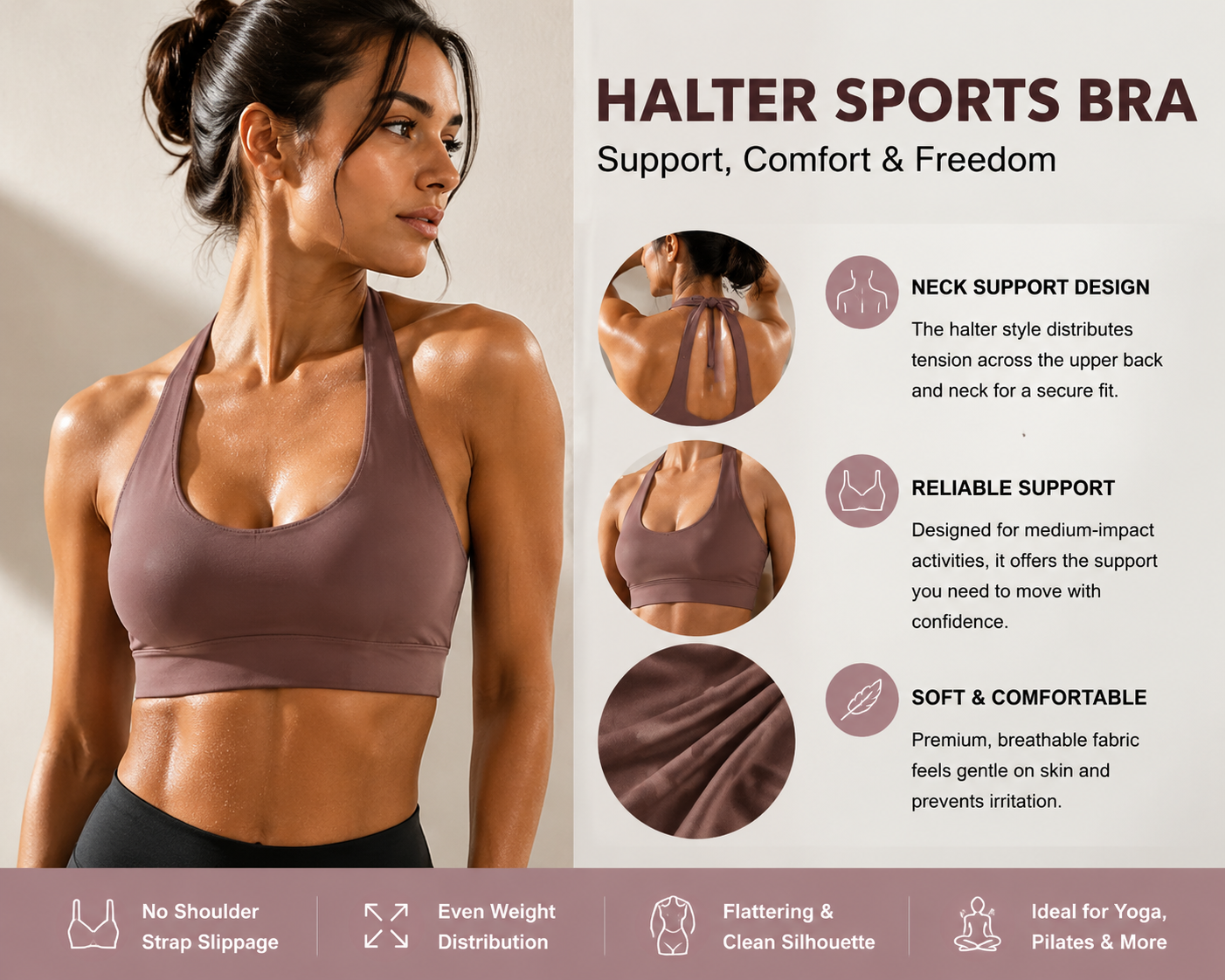
Making the Switch to a Halter Sports Bra: A Beginner's Guide
If you've been struggling with a halter sports bra — unsure whether it can actually support you, or worried the neck strap will dig in after five minutes — you're not alone. Countless athletes and fitness beginners abandon the style before giving it a fair chance, missing out on a design that genuinely solves real problems for the right wearer.
A halter sports bra is a supportive athletic top where the straps wrap around or tie at the back of the neck rather than sitting on the shoulders. This configuration eliminates shoulder strap slippage, distributes tension across the upper back and neck, and creates a cleaner silhouette for medium-impact activities. Choosing the right fit, fabric, and construction makes all the difference between comfort and irritation.
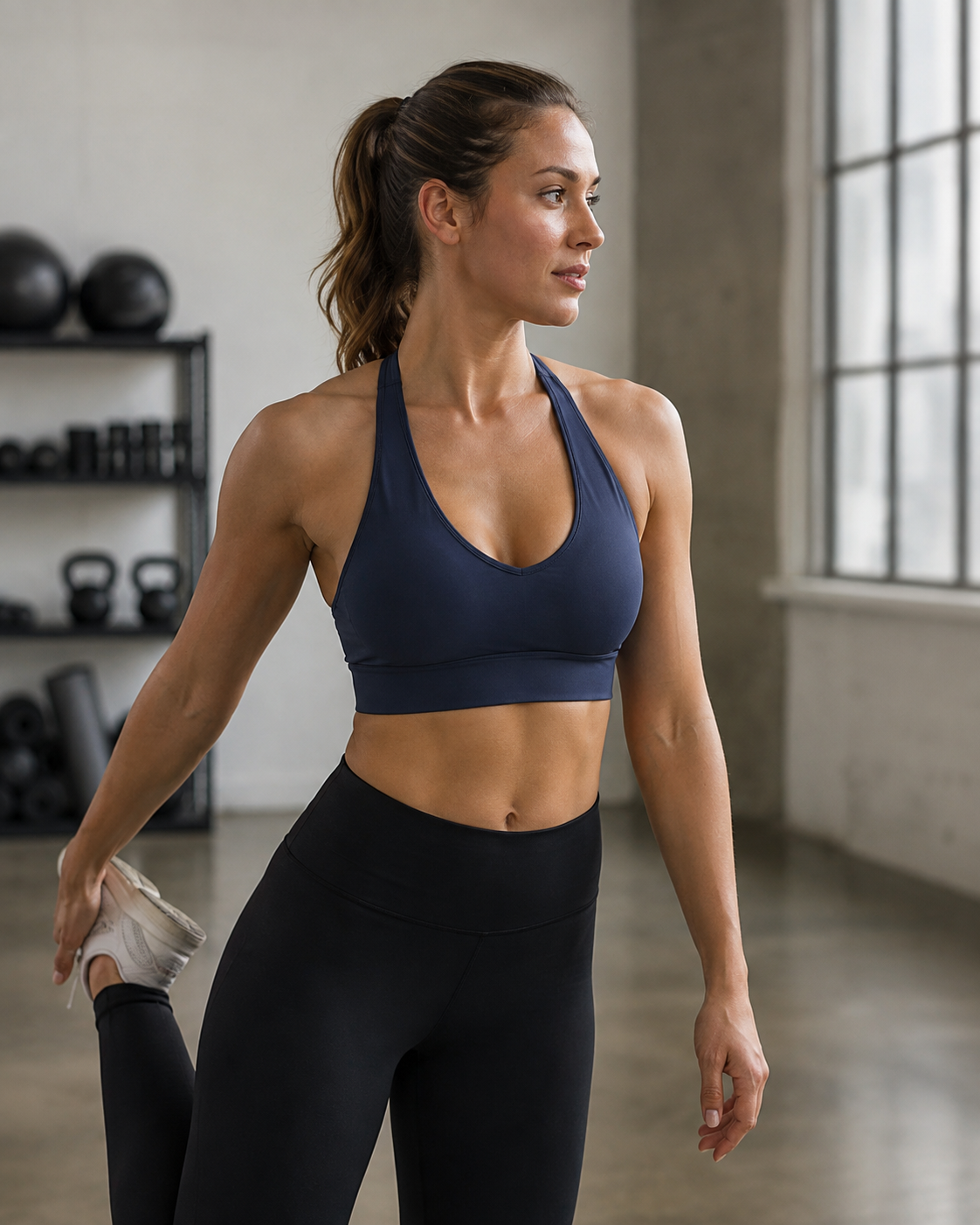
The answer above tells you what a halter sports bra is. But it doesn't tell you how to evaluate one, or whether the design actually suits your sport and body. The sections below break down each critical decision point — from fabric technology to structural construction — drawing on what I've seen through years of product development and client consultations in sportswear manufacturing.
Is a Halter Sports Bra Actually Supportive Enough?
Many first-time buyers assume the halter neckline is purely cosmetic — a fashion choice that sacrifices function. This misconception leads people to dismiss the style entirely, especially those with higher support needs who've been burned by flimsy designs before.
A well-constructed halter sports bra can provide low-to-medium impact support comparable to traditional racerback or crossback styles.[^1] Support comes from a combination of fabric tension, underband construction, and how the halter strap distributes load. For high-impact activities like running or HIIT, additional structural elements such as underwire channels or molded cups are required regardless of strap style.[^2]
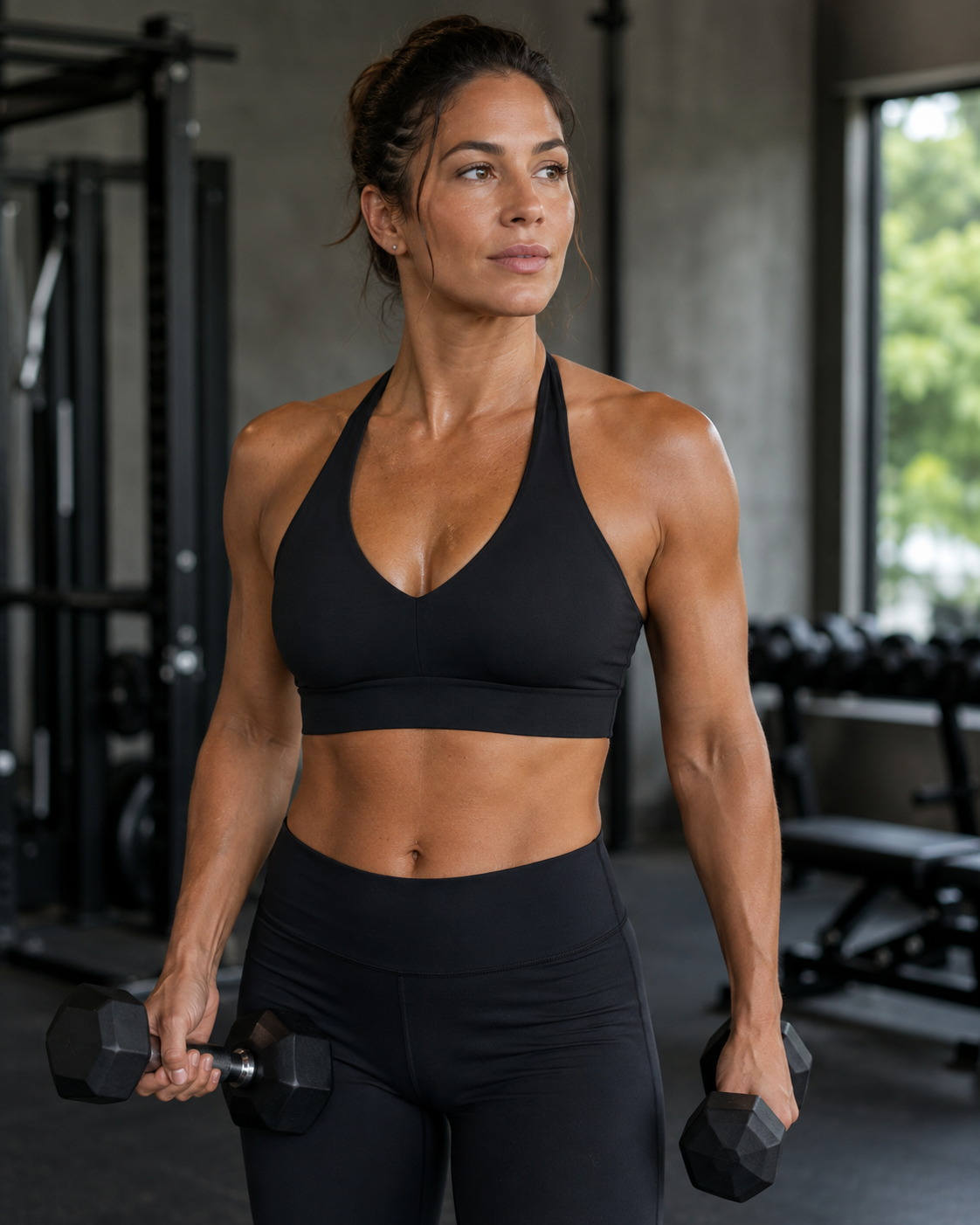
Understanding this helps you ask smarter questions before you buy — and helps you recognize whether a product you're evaluating is built to deliver what it promises.
How the Halter Configuration Changes Load Distribution
In a conventional sports bra, the shoulder straps carry a significant share of the load.[^3] When those straps slip — a common frustration, especially during forward-lean movements like cycling or rowing — support collapses in real time.
The halter design shifts that load. Here's what changes structurally:
- Neck anchor point: The strap connects at the back of the neck or ties at the nape. This creates a fixed anchor that doesn't migrate during movement.
- Upper back engagement: The strap path crosses or wraps around the upper back, pulling the front panel upward and inward rather than relying on shoulder friction.
- Underband reliance: Because the neck strap handles vertical lift, the underband (the horizontal band below the bust) handles lateral stability. A firm, non-stretch underband is therefore essential in any halter bra meant for moderate activity.[^4]
Matching Impact Level to Construction
Not all halter sports bras are built equally. The table below outlines what to look for based on your intended activity:
| Activity Type | Impact Level | Key Construction Features Needed |
|---|---|---|
| Yoga, Pilates, stretching | Low | Light compression fabric, adjustable tie neck |
| Cycling, elliptical, dance | Medium | Wide halter strap, firm underband, light padding |
| Aerobics, group fitness | Medium–High | Molded cups or bonded foam, structured underband |
| Running, HIIT, jump training | High | Encapsulated cups, underwire channel, wide reinforced strap |
From our product development work, I've seen brands consistently underestimate the underband. Clients often request minimal underband width to keep the aesthetic clean — but below 2.5 cm of firm elastic, you lose lateral stability quickly during medium-impact movement. It's a trade-off that needs to be addressed at the design stage, not after samples come back uncomfortable.
The Neck Pressure Problem — and How Good Design Solves It
The most common concern I hear from buyers and end consumers alike: won't the neck strap hurt?
It can — if the strap is too narrow, too rigid, or positioned incorrectly. Here's what separates a comfortable halter strap from an uncomfortable one:
- Width: Straps under 1.5 cm tend to concentrate pressure on the cervical spine. Straps of 2–3 cm spread load more evenly.[^5]
- Edge finish: Raw-cut edges or tight binding creates friction points. Folded and stitched edges, or soft silicone-lined binding, reduce skin irritation significantly.
- Adjustability: A fixed-length neck strap cannot accommodate different torso lengths. Adjustable hardware — even a simple slider — allows the wearer to position the anchor point correctly, reducing both downward pull and lateral pinch.
- Padding at the nape: Some designs include a thin foam or mesh pad at the neck contact point. This is a minor addition that makes a measurable difference in long-session comfort.[^6]
What Fabrics Actually Matter in a Halter Sports Bra?
Buyers often focus entirely on style and strap configuration, then discover post-purchase that the bra traps heat, loses shape after washing, or pills at the underarm. Fabric selection is where a significant portion of long-term product satisfaction is decided — long before the garment reaches the consumer.
The most important fabric properties in a halter sports bra are four-way stretch recovery, moisture-wicking rate, breathability (air permeability), and colorfastness under repeated wash conditions.[^7] Nylon-spandex and polyester-spandex blends dominate the performance sportswear market because they balance these properties effectively at commercial production scale.[^8]
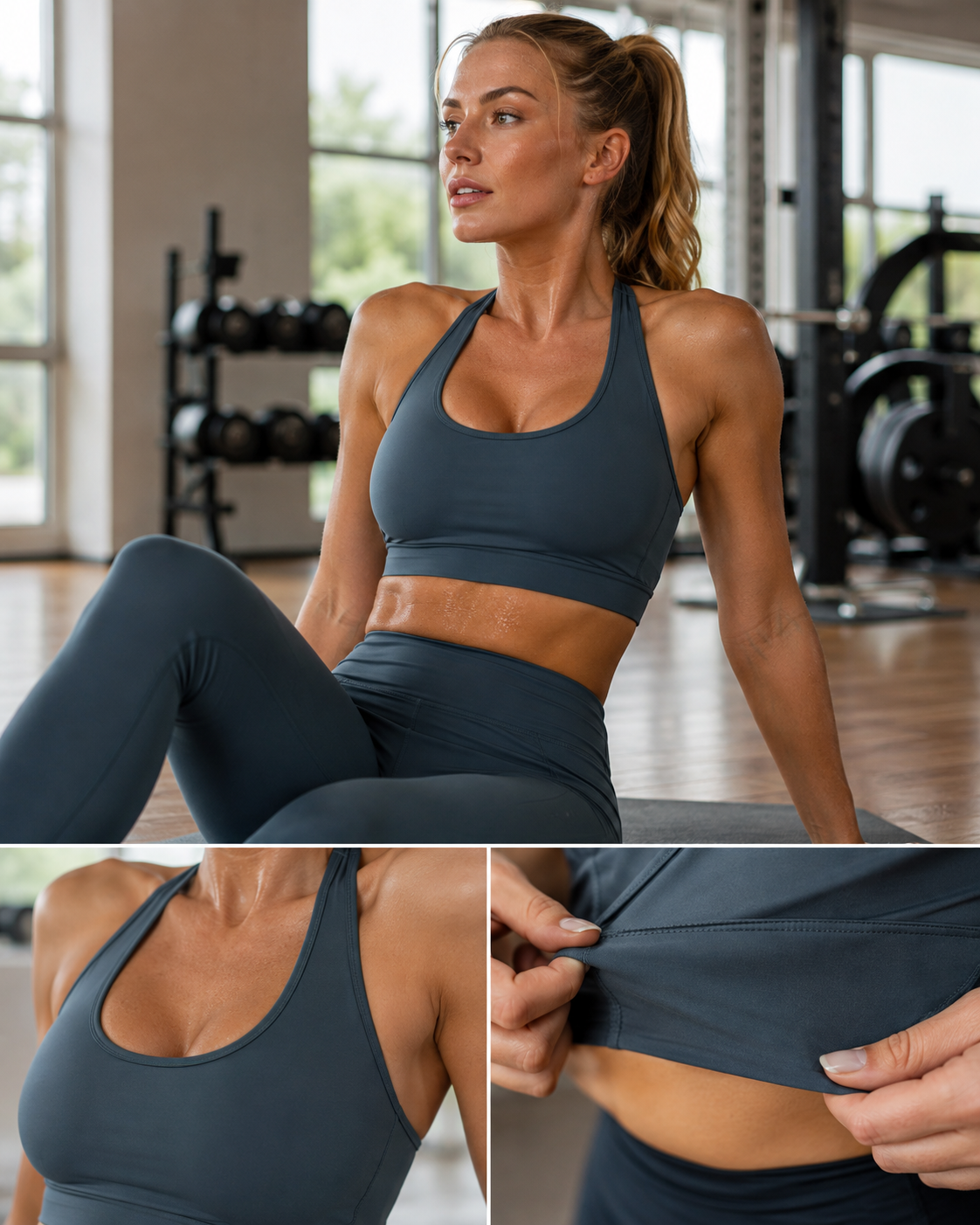
Fabric choice is not just a comfort issue — it's a durability and brand reputation issue. Here's what each key property actually means in practice.
Four-Way Stretch and Shape Recovery
"Four-way stretch" means the fabric stretches in both the horizontal and vertical directions — and returns to its original dimensions after stretching. This matters in a halter sports bra for two specific reasons:
- Version stability: The halter strap undergoes repeated tension with every arm movement. If the fabric creeps (slowly elongates without recovering), the bra progressively loses its lift and the neck strap sags.
- Fit consistency across sizes: A fabric with poor recovery requires tighter pattern grading to maintain fit, which introduces pressure points in smaller sizes and sagging in larger ones.
In our quality control process, we test stretch recovery by measuring the fabric before stretch, extending it to a defined percentage (typically 50–80%), holding for a set duration, releasing, and measuring again. The closer the post-stretch measurement is to the original, the better the recovery. For performance sportswear, we look for recovery rates above 90%.
Moisture Wicking vs. Quick Dry — They Are Not the Same
These terms are often used interchangeably in product listings, but they describe different mechanisms:
- Moisture wicking refers to the fabric's ability to draw sweat away from the skin surface through capillary action, moving it to the outer face of the fabric where it can evaporate.
- Quick dry refers to how fast that moisture evaporates once it reaches the fabric surface.
A fabric can wick effectively but dry slowly if air circulation is poor — which is why mesh panels in a halter sports bra serve a genuine functional purpose, not just an aesthetic one. Strategically placed mesh at the chest panel, underarm, or back dramatically improves evaporation rate without sacrificing structural integrity.[^9]
Fabric Certifications Buyers Should Verify
For buyers sourcing halter sports bras from manufacturers, the following certifications are worth requesting and verifying independently:
- OEKO-TEX® Standard 100: Confirms the fabric has been tested for harmful substances. Relevant for skin-contact sportswear.
- REACH compliance: European chemical safety regulation. Critical for EU market entry.
- RoHS compliance: Relevant for any components containing electronic or metallic elements (including hardware and reflective prints).
- PFAS-free certification: Increasingly required as DWR (durable water repellent) treatments come under regulatory scrutiny in the EU and North America.
Note: Certifications should always be verified against current, valid documentation issued by accredited third-party bodies. We work with TÜV Rheinland and SGS for our product certification processes, but buyers should confirm certification scope and validity dates independently.
How Do You Choose the Right Halter Sports Bra for Your Body and Sport?
Even a well-made halter sports bra will underperform if it's the wrong style for your body proportions or activity type. First-time buyers often choose based on appearance alone, then conclude the entire category doesn't work — when the real issue was a mismatch between design and application.
The right halter sports bra for you depends on three variables: your bust size and shape, the impact level of your primary activity, and your torso length. Buyers with longer torsos need adjustable neck straps. Those with fuller busts need wider straps and stronger underbands. Those primarily doing low-impact movement have the most style flexibility.
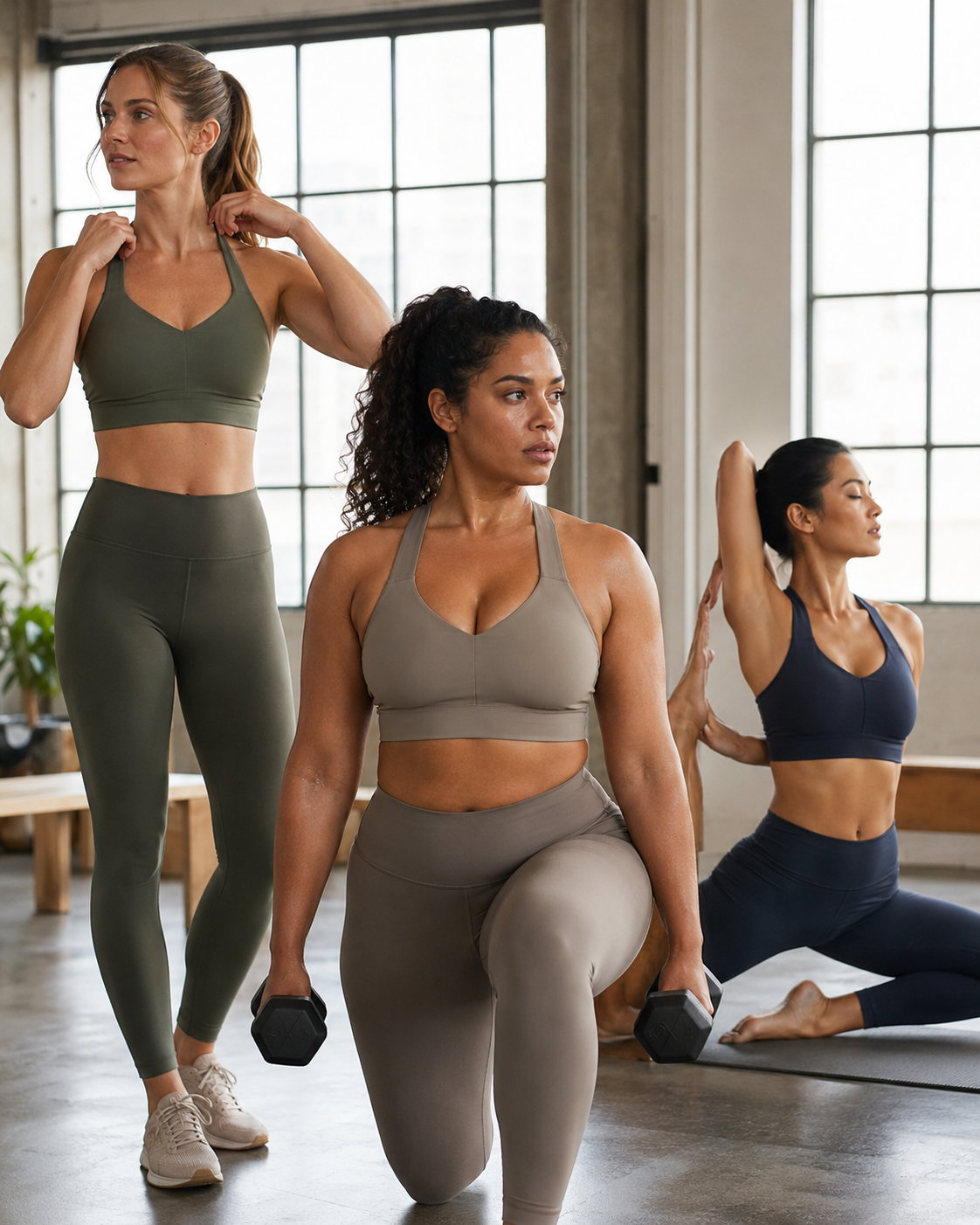
These aren't arbitrary style preferences — they're structural requirements. Here's how to think through each variable.
Bust Size and Strap Width
The halter strap is doing work proportional to the weight it supports. For smaller cup sizes (A–B), a narrow decorative strap may be sufficient for low-impact activity. For larger cup sizes (C and above), the strap width and the underband firmness both need to scale up.
Common design approaches for fuller bust support:
- Wide halter strap (3 cm+): Increases contact area at the neck, reducing pressure per square centimeter.
- Double-layer front panel: Adds compression layer that works in tandem with the halter strap to reduce bounce.
- Bonded or seam-free cups: Reduce internal seam bulk that can cause friction during high-repetition movement.
- J-hook or multi-position hardware: Allows the wearer to convert between halter and standard strap configurations — useful for activities that transition between high and low impact.
Torso Length and Adjustability
This is a sizing variable that most product listings ignore entirely. A halter strap set for a 165 cm wearer will position the neck anchor point differently on a 175 cm wearer — often causing the strap to pull backward rather than upward, which shifts load from the upper chest panel to the back of the neck.
If you're above average in torso length, prioritize:
- Adjustable back tie or slider hardware
- Longer strap paths that allow repositioning
- Designs where the strap attaches at the center-back rather than behind the neck
Activity-Specific Recommendations
| Your Primary Activity | Recommended Style Features |
|---|---|
| Yoga / low-impact stretching | Adjustable tie neck, minimal padding, light compression |
| Cycling / spinning | Fixed wide strap, firm underband, racerback-halter hybrid |
| Dance / aerobics | Adjustable slider, moderate compression, full coverage cup |
| Running (C cup and below) | Structured cup, reinforced underband, padded neck strap |
| Running (D cup and above) | Encapsulated design only — evaluate halter strap width carefully |
What Does Manufacturing Quality Look Like in a Halter Sports Bra?
Knowing what good construction looks like helps you evaluate products more accurately — whether you're a consumer, a buyer sourcing for a brand, or a distributor assessing samples. Manufacturing quality in sportswear isn't always visible at first glance, but it shows up quickly under real-use conditions.
High-quality halter sports bras are characterized by consistent seam tension, flat-locked or bonded stitching at stress points, symmetrical cup shaping, and hardware that shows no corrosion or deformation after wash testing. These are observable indicators that reflect the discipline of the manufacturing process behind the product.
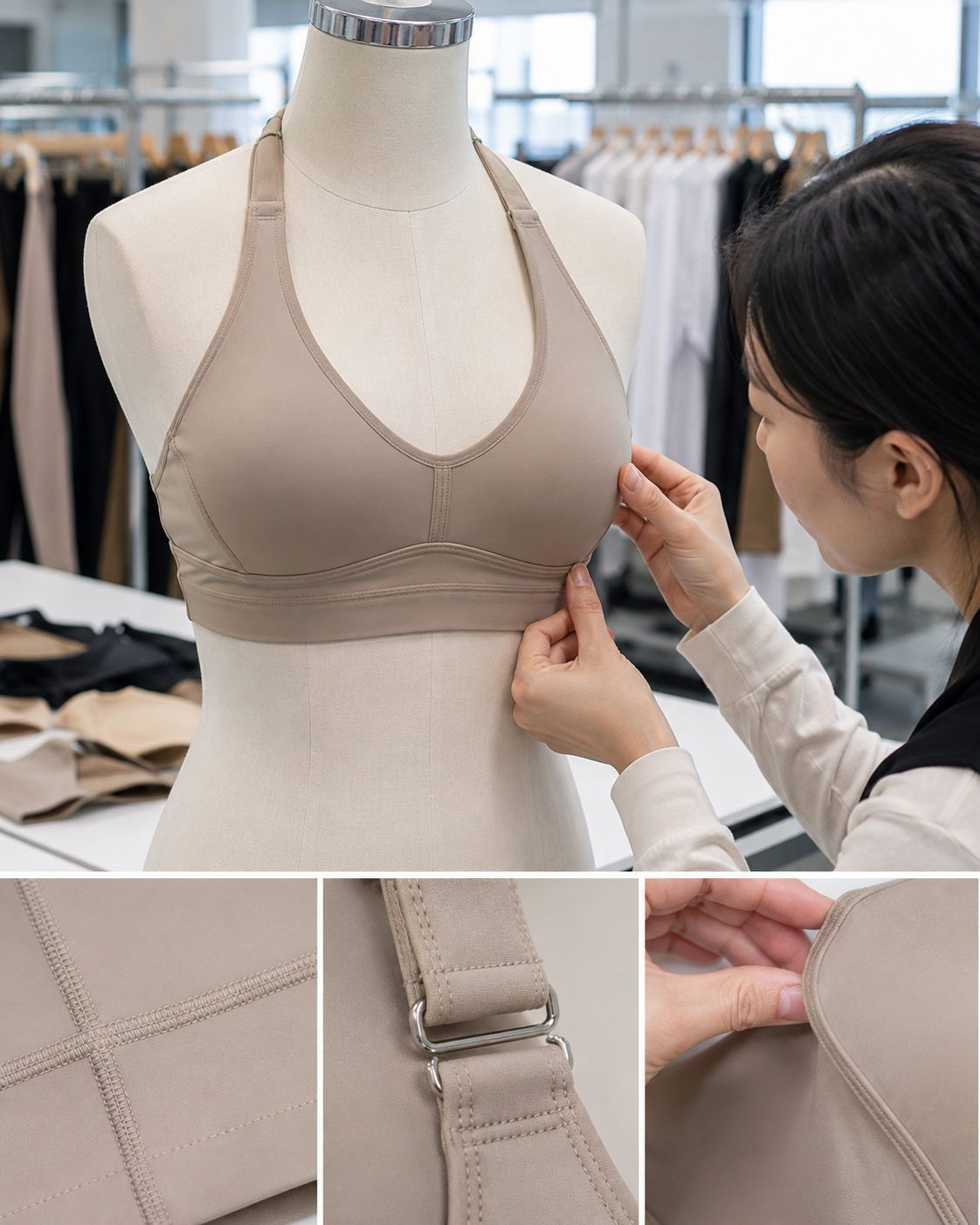
From the factory floor, here's what separates a well-manufactured halter sports bra from a cheaply produced one.
Seam Construction and Stitch Types
The halter strap attachment point is the highest-stress seam in the garment. During overhead arm movement or front-lean activities, this seam experiences both tensile and shear forces simultaneously. The stitching here needs to be redundant — meaning reinforced, not just covered.
What to look for:
- Flatlock stitching at the strap-to-panel junction: Lies flat against the skin, reduces friction, and distributes tension across a wider area than a standard overlock stitch.
- Bar tack reinforcement at strap endpoints: A dense cluster of stitches that prevents seam unraveling under repeated stress.
- No exposed raw edges at neck contact points: Raw-cut fabric edges will fray and irritate the skin after 5–10 wash cycles.
Cup and Pad Construction
Removable cups are common, but the quality varies significantly. Here's what we evaluate during inspection:
- Foam density and recovery: The cup should return to its original shape after compression. Low-density foam collapses and loses volume after minimal use.
- Cup symmetry: Measured against a template — both cups should be identical in profile and volume. Asymmetrical cups cause uneven pressure and a distorted silhouette.
- Pocket opening placement: Cup pockets should open from the bottom or side, not the top. Top-opening pockets allow cups to migrate upward during movement.
Wash Durability Standards
All the structural features above need to survive real-world use. In our testing protocols, garments undergo:
- 50-cycle wash testing at temperatures matching care label instructions
- Stretch recovery testing before and after wash cycles
- Colorfastness testing under light exposure and perspiration conditions
- Hardware corrosion testing for any metal components
A bra that loses its shape, develops pilling, or shows strap elongation within 10 washes has a material or construction deficiency — not just a "wear and tear" issue.
Frequently Asked Questions
Can I wear a halter sports bra for running?
Yes, but construction matters. For low-to-medium bust sizes and low-impact jogging, a well-structured halter sports bra with a reinforced underband performs adequately. For high-impact running or fuller bust sizes, look for designs with encapsulated cups and a padded, adjustable halter strap to prevent neck strain.
Will the neck strap bother me during longer workouts?
It depends on strap width, adjustability, and your neck sensitivity. Straps narrower than 1.5 cm tend to concentrate pressure. Opt for designs with straps of 2 cm or wider, soft edge finishing, and adjustable length. Most wearers adapt within 2–3 sessions once the fit is correctly dialed in.
How is a halter sports bra different from a regular sports bra?
The primary difference is the strap path. Standard sports bras use shoulder straps that can slip during forward-lean movement. A halter sports bra anchors at the neck, eliminating slippage and creating a strapless shoulder line. The trade-off is potential neck pressure if the strap is not well-designed or properly adjusted.
What fabric should I look for in a halter sports bra?
Look for nylon-spandex or polyester-spandex blends with four-way stretch. Confirm the fabric has moisture-wicking properties and check whether the product carries OEKO-TEX® or equivalent third-party fabric safety certification. Mesh panels at the back or sides improve breathability significantly.
How do I know if a halter sports bra is well-made?
Check the strap attachment seams for flatlock or bar-tack reinforcement. Inspect cup symmetry and foam recovery. Verify that all edges at neck contact points are finished, not raw-cut. Ask suppliers for wash-durability test data. These details reflect manufacturing discipline that directly affects how the product performs over time.
Conclusion
Switching to a halter sports bra is a practical decision — not just a stylistic one. The halter sports bra format solves specific, real problems like shoulder strap slippage and limited back coverage, but only when the design, fabric, and construction are matched correctly to your activity and body. Key takeaways: support depends on underband quality and strap width, not strap configuration alone; fabric technology determines long-term comfort and durability; and manufacturing quality is readable if you know what to look at. Use these criteria to evaluate your next purchase rather than defaulting to appearance alone.
If you're a brand, distributor, or buyer looking to source well-constructed halter sports bras at scale — or develop a custom style for your market — we'd welcome the conversation. Contact our team at justin@purongsports.com