
Top 10 Sportswear Manufacturers in China (2026)
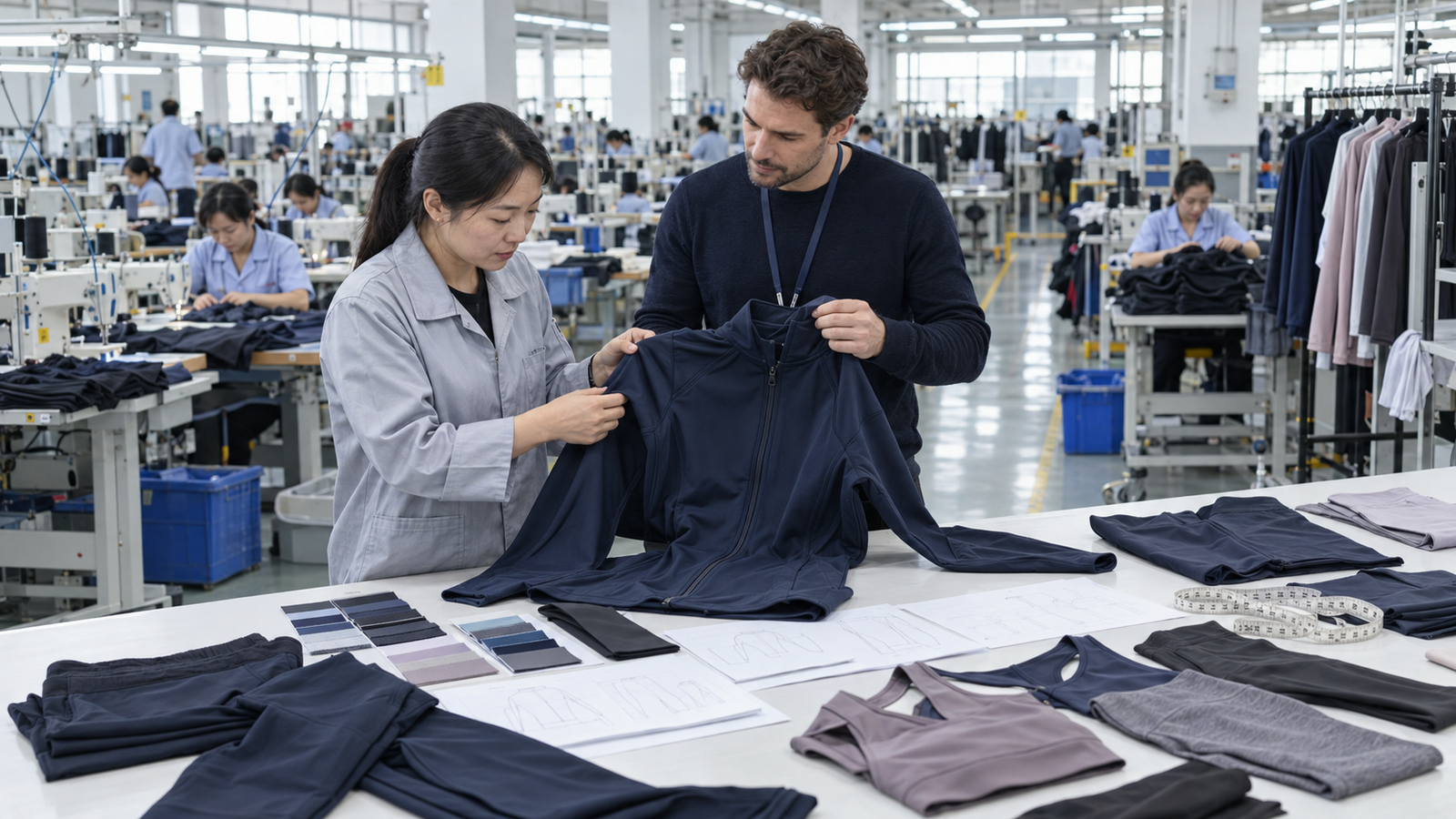
Finding a reliable partner among the vast number of sportswear manufacturers in China can feel overwhelming. You're trying to launch or scale your brand, but you're worried about inconsistent quality, missed deadlines, and communication barriers that could sink your entire collection. The right manufacturing partner is the solution, providing the expertise, quality, and reliability you need to succeed.
Based on our extensive industry experience, the top sportswear manufacturers in China for 2026 include companies like Hucai Sportswear, Ingor Sportswear, and our own Dongguan Pro Sportswear[^1]. These manufacturers are distinguished by their proven OEM/ODM capabilities[^2], stringent quality control systems, advanced production technology, and strong track records serving international brands, wholesalers, and e-commerce sellers.
Choosing the right partner is the single most important decision you'll make for your apparel business. This list isn't just a directory; it's a starting point for your due diligence. Below, we'll explore what makes these companies stand out and what criteria you should use to evaluate any potential supplier.
How Did We Select These Top Sportswear Manufacturers in China?
Sourcing partners are a critical decision, and a simple Google search doesn't always tell the whole story. As someone who has been in the sportswear manufacturing business for over a decade, I've seen firsthand what separates the great suppliers from the rest. Our selection process for this list focused on objective, verifiable criteria that directly impact your business's success.
We prioritized manufacturers with deep OEM/ODM (Original Equipment Manufacturer / Original Design Manufacturer) experience. This is crucial for brands that need a partner to bring a unique vision to life, from initial design and fabric sourcing to full-scale production. We also looked for robust quality control systems, backed by internationally recognized certifications like ISO 9001, OEKO-TEX®, and third-party audits from firms like SGS or TüV Rheinland[^3]. These are not just badges; they are proof of a commitment to quality and safety.[^4]
Our Evaluation Criteria
We built this list by focusing on the factors that truly matter for long-term partnerships. We didn't just look at company size; we looked at their capabilities and market reputation.
- OEM/ODM Expertise: A proven ability to handle custom designs, from tech packs to finished products. This includes fabric sourcing, pattern making, and sample development.
- Quality & Compliance: Verifiable certifications (ISO, OEKO-TEX®, etc.) and a transparent quality assurance process. We looked for manufacturers who perform multi-stage inspections, from raw materials to final packaging.
- Production Technology: Use of modern equipment, such as automated cutting machines (like CNC Auto Cutters), which improves precision and efficiency.[^5]
- Market Focus: Experience working with international clients, particularly in Europe and North America. This indicates an understanding of global trends, sizing standards, and compliance requirements.[^6]
- Communication: A responsive and professional English-speaking sales and support team is non-negotiable for international clients.
This list represents manufacturers who excel in these areas, making them strong potential partners for serious brands.
A Closer Look at the Top 10 Sportswear Manufacturers in China
Here is our curated list of leading manufacturers. This list is in no particular order, as the "best" choice always depends on your specific product needs, order volume, and brand focus.
1. Hucai Sportswear
Located in Guangdong, Hucai has over 20 years of experience and is known for its large-scale production capabilities. They serve many well-known global brands and have a strong focus on yoga wear and activewear. Their extensive facility and large workforce make them a go-to for high-volume orders.
2. Ingor Sportswear
Ingor Sportswear, also in Guangdong, specializes in a wide range of activewear, including yoga wear, swimwear, and gym apparel. They are noted for their strong design team and willingness to work with startups and established brands alike, offering flexible MOQs (Minimum Order Quantities).
3. Tonton Sportswear
Based in Shenzhen, Tonton has carved out a niche in custom sublimated sportswear. They are a popular choice for team jerseys, e-sports apparel, and garments requiring complex, all-over prints. Their digital printing technology is a key asset for brands focused on vibrant, graphic-heavy designs.
4. Kelme
While Kelme is a well-known sportswear brand, its manufacturing division in China is a powerhouse. With decades of experience, they have massive production lines and a deep understanding of performance fabrics and construction. They are an option for brands looking for very large-scale, established manufacturing partners.
5. Dongguan Pro Sportswear (Purong Sports)
As our own company, we confidently place ourselves on this list. With 12 years of dedicated OEM/ODM experience in Dongguan, we focus on providing a one-stop solution for global brands, wholesalers, and e-commerce sellers. Our strengths lie in:
- Specialized Production: We operate our own 15,000㎡ factory with dedicated lines for women's, men's, and small-batch custom orders.
- Advanced Technology: We utilize CNC Auto Cutters for precision and efficiency, ensuring every piece is cut to exact specifications.
- Full-Service Partnership: Our 20-person R&D team, each with over 10 years of experience, helps clients with everything from design ideation to material selection and mass production.
- Certified Quality: We hold certifications from TüV Rheinland, SGS, OEKO-TEX®, and ISO 9001, ensuring our products meet stringent international standards for safety and quality.
- High Capacity: With a monthly output of over 200,000 pieces, we can handle both large and small orders with stable delivery schedules.
6. Arabella
Located in Zhejiang, Arabella is a prominent manufacturer of yoga and fitness apparel. They are known for their focus on sustainable materials and ethical production practices. They have a strong design team that releases new collections regularly, making them a good ODM partner for brands looking for ready-made styles.
7. Royalife
Specializing in seamless activewear, Royalife is another key player from Zhejiang. Seamless technology requires specialized machinery and expertise, and they are a leader in this category. Their products include seamless leggings, sports bras, and base layers known for their comfort and fit.
8. Uga Sportswear
Uga Sportswear is a well-regarded supplier with a focus on quick turnaround times and flexible order quantities. They work with many emerging online brands and offer a wide catalog of activewear styles that can be customized with private labels.
9. Yaroad Clothing
Based in Guangzhou, Yaroad produces a broad range of apparel, with a strong division for sportswear and athletic clothing. They have a reputation for good project management and clear communication, making the development process smoother for overseas clients.
10. Goal Sportswear
Goal Sportswear specializes in custom team sportswear and sublimated apparel. Located in Zhejiang, they are known for their fast production of custom-designed jerseys, shorts, and tracksuits for sports clubs, schools, and corporate events.
What Key Factors Define the Best Sportswear Manufacturers in China?
Choosing a supplier feels like a high-stakes decision because it is. You're not just buying a product; you're forming a partnership. Are you struggling to figure out what really matters when comparing potential factories? The key is to look beyond the price tag and evaluate their core capabilities.
The best sportswear manufacturers in China are defined by a combination of technical skill, reliable processes, and excellent service. They act as an extension of your own team, providing the infrastructure and expertise you need to build a successful brand. Let's break down the critical factors.
Dive Deeper into Supplier Evaluation
When you're vetting a manufacturer, you need a clear checklist. In my experience, focusing on the following five areas will give you a comprehensive picture of their suitability as a long-term partner.
H3: OEM/ODM Capabilities
OEM (Original Equipment Manufacturer) means the factory produces your design. ODM (Original Design Manufacturer) means you choose one of their existing designs and private label it.[^7] A great partner excels at both.
- For OEM: Can they work from a technical pack? How is their sampling process? Do they have experienced pattern makers? Ask to see examples of custom projects they've completed for other clients (without revealing confidential details).
- For ODM: Do they have a diverse catalog of modern, on-trend styles? How often do they update it? Can you customize colors, fabrics, and branding on their existing designs?
At Dongguan Pro Sportswear, our 20-person R&D team is built to handle complex OEM projects, but we also offer a wide range of market-tested ODM styles that clients can adapt for a faster launch.
H3: Quality Control and Certifications
This is non-negotiable. Quality issues can ruin your brand's reputation.
- Process: Ask about their quality assurance (QA) process. Do they inspect raw materials upon arrival? Do they have in-line inspections during production? Is there a final inspection before shipping? A good factory follows a standardized SOP (Standard Operating Procedure) for quality.
- Certifications: Look for proof of third-party certifications.
- ISO 9001: A standard for quality management systems.
- OEKO-TEX® Standard 100: Ensures textiles are free from harmful substances.
- SGS/TüV Audits: Reports from independent firms that verify a factory's claims about their facility, production, and labor practices. Always ask for the certificate documents and verify their validity.
H3: Fabric Sourcing and Technology
The fabric is the heart of any sportswear garment. A top-tier manufacturer has a sophisticated supply chain for performance materials. They should be knowledgeable about fabrics that offer properties like four-way stretch, moisture-wicking, breathability, and compression.[^8] Ask them where they source their fabrics and what testing they perform. For instance, we conduct tests for colorfastness, wash durability, and stretch-and-recovery[^9] on all our materials to ensure they perform as expected.
H3: Production Capacity and Lead Times
You need a partner who can grow with you.
- Capacity: What is their monthly production capacity? A capacity of 100,000–200,000 pieces per month indicates a well-established factory.[^10]
- Lead Time: Ask for their typical lead times for samples (usually 7–14 days) and mass production (usually 30–50 days after sample approval). Reliable timing is crucial for planning your inventory and marketing launches.
- Flexibility: Can they handle both small test orders and large-scale production runs? This flexibility is a huge asset.
H5: Communication and Service
Even with the best factory, problems can arise. Clear, prompt communication is what solves them. Does the sales representative speak fluent English? Are they responsive to emails? Do they provide clear answers and proactive updates? A good partner communicates transparently, especially when there are potential delays or issues.
| Feature | What to Look For | Why It Matters |
|---|---|---|
| OEM/ODM | Experienced R&D team, clear sampling process. | Brings your unique vision to life accurately. |
| Certifications | ISO 9001, OEKO-TEX®, SGS/TüV reports. | Verifies commitment to quality, safety, and ethics. |
| Fabric Sourcing | Strong network of fabric suppliers, in-house testing. | Ensures high-performance, durable, and safe garments. |
| Capacity | Monthly output, lead times, order flexibility. | Guarantees they can meet your demand and deadlines. |
| Communication | Fluent English, responsive team, transparency. | Prevents misunderstandings and ensures a smooth process. |
Frequently Asked Questions
How do I verify a manufacturer's certifications?
Ask the manufacturer for a copy of the certificate. These documents will have a certificate number and the name of the issuing body (e.g., OEKO-TEX®, TüV Rheinland, SGS). You can usually go to the issuing body's website and use their public database to verify that the certificate is current and valid for that specific company.
What is the typical MOQ for custom sportswear?
Minimum Order Quantities (MOQs) vary widely. For fully custom OEM orders, MOQs often start at 300–500 pieces per style, per color. For ODM orders using a factory's existing designs, MOQs can sometimes be lower, around 100–200 pieces. Some factories, like ours, offer flexibility for new clients or smaller test runs.
What's the difference between OEM and ODM?
OEM (Original Equipment Manufacturer) is when you provide the complete design and technical specifications, and the factory manufactures it for you. ODM (Original Design Manufacturer) is when you select a pre-existing design from the factory's catalog and have them produce it with your brand's logo and packaging.
How long does production and shipping from China typically take?
On average, after you approve the final sample, mass production takes about 30–50 days. Ocean freight to North America or Europe can take another 30–45 days. Air freight is much faster (5–10 days) but significantly more expensive. Always factor in potential customs delays when planning your timeline.
Conclusion
Choosing from the many sportswear manufacturers in China is a foundational step in building a successful apparel brand. The best partners offer more than just production; they provide design expertise, rigorous quality control, and reliable service. By focusing your evaluation on OEM/ODM capabilities, verifiable certifications, production capacity, and clear communication, you can identify a supplier that will help you deliver high-quality products to your customers consistently. This due diligence protects your investment and sets your brand up for long-term growth.
If you are a brand, wholesaler, or importer looking for a dependable manufacturing partner with a proven track record, we are here to help. With our full-service OEM/ODM solutions and commitment to quality, we can turn your vision into a reality. Contact us at Dongguan Pro Sportswear today to discuss your next sportswear collection.
[^1]: "China Sportswear Market Share, Companies & Trends Report 2026 ...", https://www.kenresearch.com/industry-reports/china-sports-wear-market. An industry research source on China’s apparel and sportswear manufacturing sector supports the contextual basis for evaluating Chinese sportswear suppliers by production capability, export orientation, and supplier verification criteria; it does not independently prove that the listed companies are the definitive top manufacturers for 2026. Evidence role: general_support; source type: research. Supports: A neutral industry or market source should support the broader context that China has a significant sportswear and activewear manufacturing base and identify verifiable criteria for assessing suppliers.. Scope note: Contextual support only; it would not validate the article’s exact ranking unless the source names and ranks the same companies. [^2]: "How Fashion Brands Can Best Ensure Worker Safety in ...", https://anderson-review.ucla.edu/audit-suppliers/. Institutional guidance on manufacturing arrangements distinguishes OEM production, in which a supplier manufactures to a buyer’s specifications, from ODM production, in which a supplier provides an existing design for private-label use; this supports the terminology used but does not verify any individual factory’s capability. Evidence role: definition; source type: institution. Supports: A neutral source should define OEM and ODM manufacturing models and explain the types of evidence normally used to verify those capabilities.. Scope note: The source would define the concept, not prove that each named manufacturer has proven OEM/ODM performance. [^3]: "ISO 9001:2015 - Quality management systems", https://www.iso.org/standard/62085.html. Standards-organization documentation identifies ISO 9001 as a quality-management-system standard and OEKO-TEX Standard 100 as a textile certification based on testing for regulated and harmful substances, while conformity-assessment guidance explains the role of independent audits in supplier verification. Evidence role: expert_consensus; source type: institution. Supports: Authoritative standards bodies should support that ISO 9001 concerns quality management systems, OEKO-TEX Standard 100 concerns tested textile safety, and third-party audits are used in conformity assessment.. Scope note: Such sources support the meaning and relevance of the certifications, but the article still needs current certificates or audit reports to prove any specific manufacturer holds them. [^4]: "Quality management system", https://en.wikipedia.org/wiki/Quality_management_system. Certification-body and standards documentation supports that recognized certifications provide evidence of conformity to specified management-system or product-safety requirements within a defined scope and validity period; they should not be read as proof of all aspects of product quality or ethical performance. Evidence role: expert_consensus; source type: institution. Supports: A standards or accreditation source should clarify what certification can and cannot demonstrate about quality management and textile safety.. Scope note: The support is qualified because certification confirms conformity to specified requirements, not an unrestricted guarantee of overall manufacturer quality. [^5]: "Automated Cutting and Sewing for Industry 4.0 at ITMA 2019", https://jtatm.textiles.ncsu.edu/index.php/JTATM/article/download/16453/7266/59551. Research on computer-controlled cutting in apparel manufacturing describes automated cutting systems as a way to improve cutting accuracy, repeatability, and production efficiency compared with manual cutting processes. Evidence role: mechanism; source type: paper. Supports: A textile manufacturing study should explain how automated or computer-controlled cutting affects cutting accuracy, material utilization, labor requirements, or throughput.. Scope note: The source would support the general manufacturing mechanism, not the performance of a particular factory’s machines. [^6]: "Apparel and Labeling | Federal Trade Commission", https://www.ftc.gov/news-events/topics/tools-consumers/apparel-labeling. Government guidance on textile and apparel labeling in the United States and European Union shows that apparel products are subject to market-specific labeling and compliance obligations, supporting the relevance of supplier familiarity with export-market requirements. Evidence role: general_support; source type: government. Supports: Government and standards sources should support that apparel sold in different markets is subject to distinct labeling, sizing, fiber-content, and compliance requirements.. Scope note: This supports the importance of market-specific knowledge but does not prove that any named manufacturer possesses it. [^7]: "Original design manufacturer", https://en.wikipedia.org/wiki/Original_design_manufacturer. Reference descriptions of OEM and ODM manufacturing distinguish production to another firm’s specifications from manufacturing based on a supplier’s own design for sale under another brand, supporting the article’s use of these terms. Evidence role: definition; source type: encyclopedia. Supports: A reference source should define OEM and ODM and distinguish buyer-designed manufacturing from supplier-designed private-label production.. [^8]: "Advancements in functional smart and wearable textiles for ...", https://pmc.ncbi.nlm.nih.gov/articles/PMC12716241/. Textile science literature on performance sportswear identifies elasticity, moisture-management behavior, air permeability or breathability, and compression as functional fabric properties affecting comfort and athletic performance. Evidence role: mechanism; source type: paper. Supports: A textile science paper should support that stretch, moisture transport, air permeability or breathability, and compression are recognized performance characteristics in sportswear fabrics.. Scope note: The source would support the relevance of these properties generally, not verify that any particular supplier can source or test such fabrics. [^9]: "Standard Test Methods and Procedures", https://www.aatcc.org/testing/standards. Textile testing standards from organizations such as AATCC, ASTM, and ISO include methods for evaluating colorfastness to laundering and fabric stretch-and-recovery behavior, supporting the relevance of these tests in apparel quality assessment. Evidence role: expert_consensus; source type: institution. Supports: Textile standards organizations should support that colorfastness to laundering and fabric stretch-and-recovery are standardized test areas.. Scope note: The standards support the appropriateness of the test categories but do not verify that the manufacturer performs them correctly or consistently. [^10]: "Scale without compromising quality. With a production ...", https://www.instagram.com/p/Db2ezTHM28v/. Research on apparel-manufacturing capacity can contextualize monthly output figures by relating piece-volume capacity to factory scale, workforce, equipment, and production-line organization. Evidence role: general_support; source type: research. Supports: An apparel-manufacturing report should provide context on typical production capacities and what output levels imply about factory scale.. Scope note: Unless the source establishes a specific threshold, it would only contextualize the 100,000–200,000-piece figure rather than prove that it universally denotes a well-established factory.