
What Is Spandex Made Of? Fiber Chemistry & Manufacturing (2026 Guide)
Struggling with sportswear fabrics that lose their shape or don't perform as expected? Many B2B buyers overlook the intricate details of what Spandex is made of, leading to costly quality issues and dissatisfied customers. Understanding the fiber chemistry and manufacturing processes of Spandex is crucial for sourcing materials that truly meet the demands of high-performance apparel.
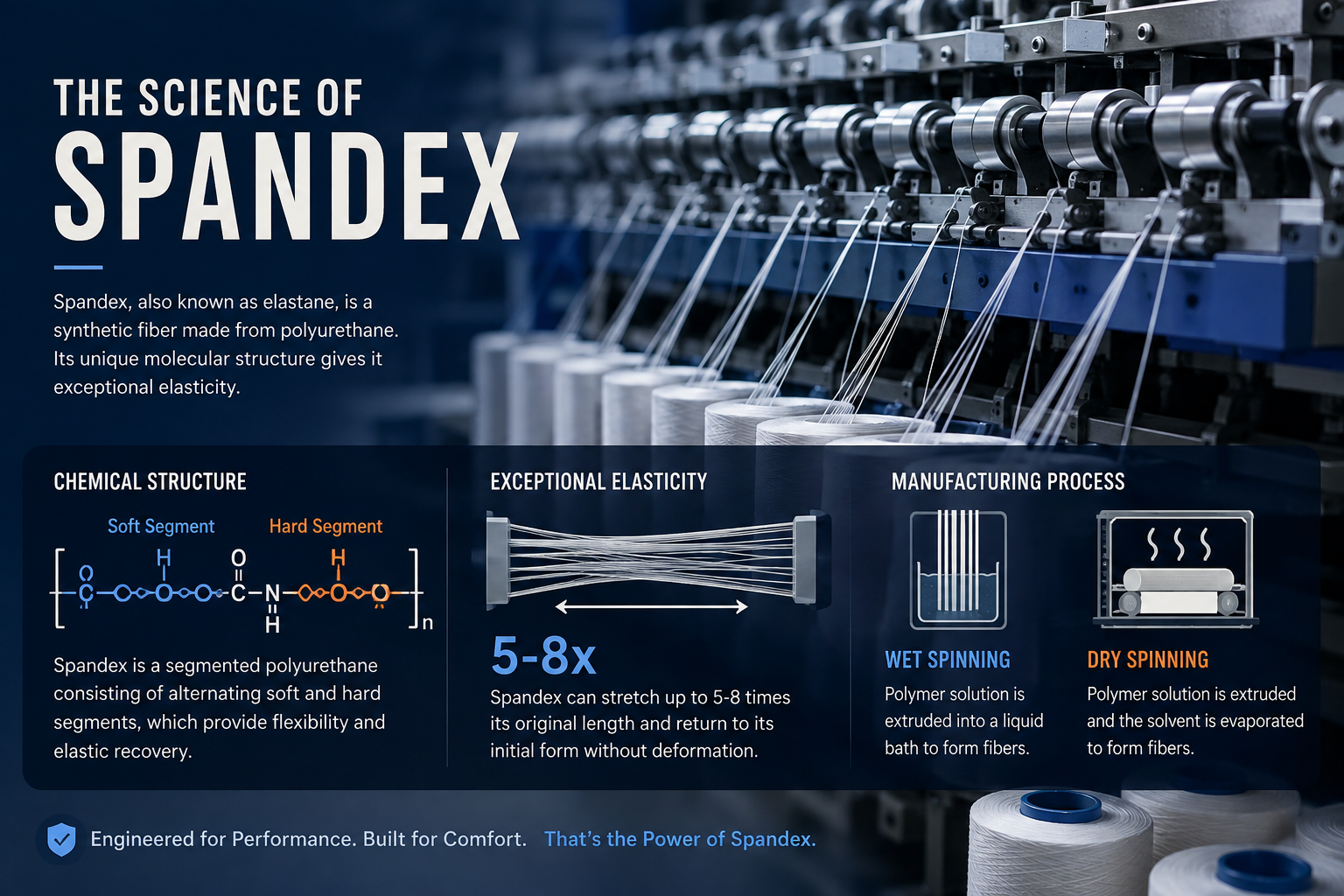
Spandex, also known as elastane, is a synthetic fiber primarily made from a long-chain polymer called polyurethane.[^1] This unique chemical structure, characterized by a combination of flexible "soft" segments and rigid "hard" segments, is what gives Spandex its exceptional elasticity, allowing it to stretch up to 5-8 times its original length and return to its initial form without significant deformation.[^2] The manufacturing process, typically dry spinning or wet spinning, further refines these properties for various textile applications.
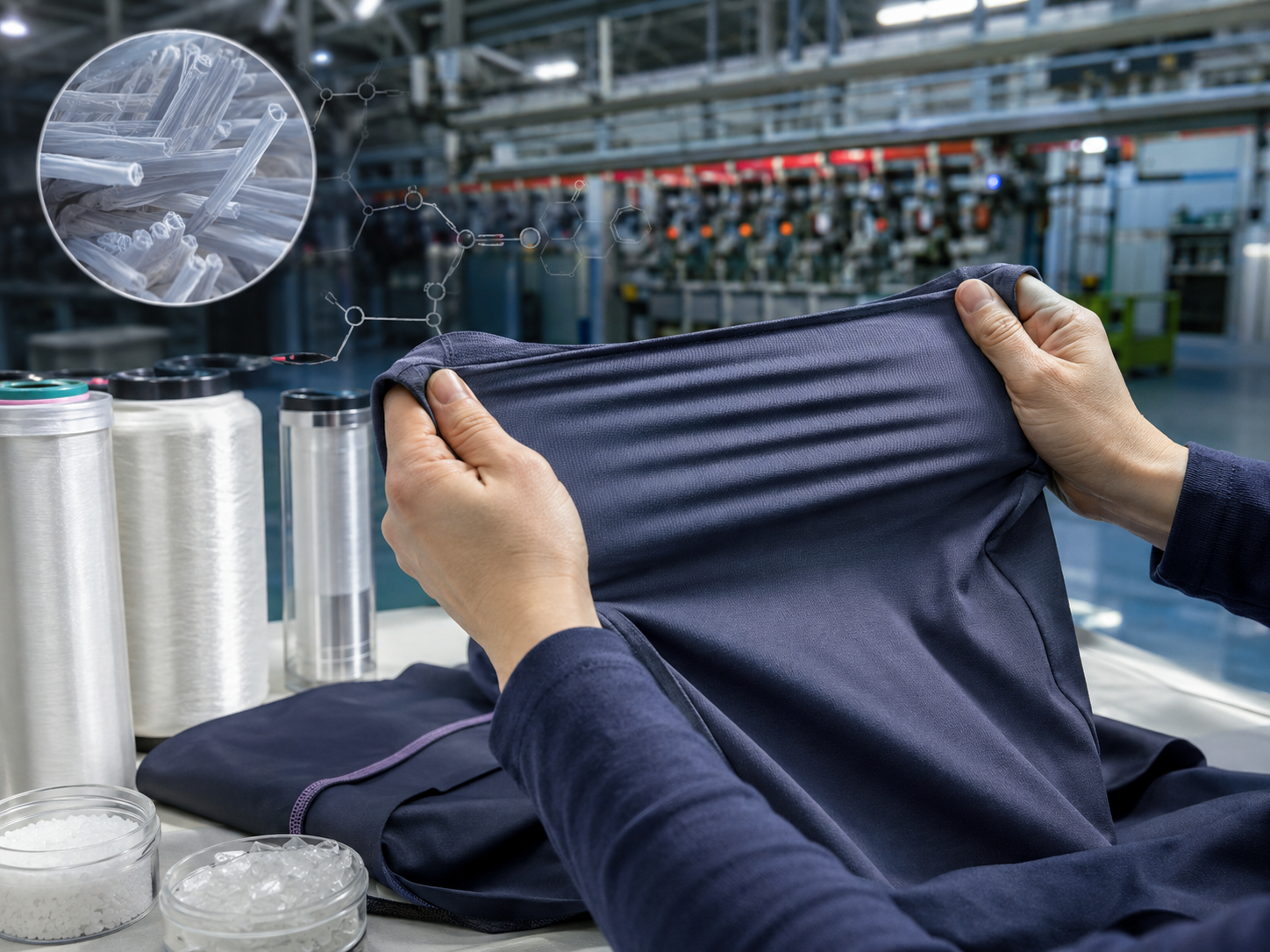
Moving beyond the basic definition, delving into the specific types of polyurethane and the methods used to create Spandex fibers reveals why not all "stretch fabrics" are created equal. This deeper insight is invaluable for making informed procurement decisions that ensure your products stand out in a competitive market.
What Exactly Is Spandex, Chemically Speaking?
Have you ever wondered why some garments stretch perfectly while others bag out after a few wears? The secret lies in the fundamental chemical makeup of Spandex itself. Without understanding its core components, you might struggle to differentiate between truly durable elastic fibers and those that fall short.
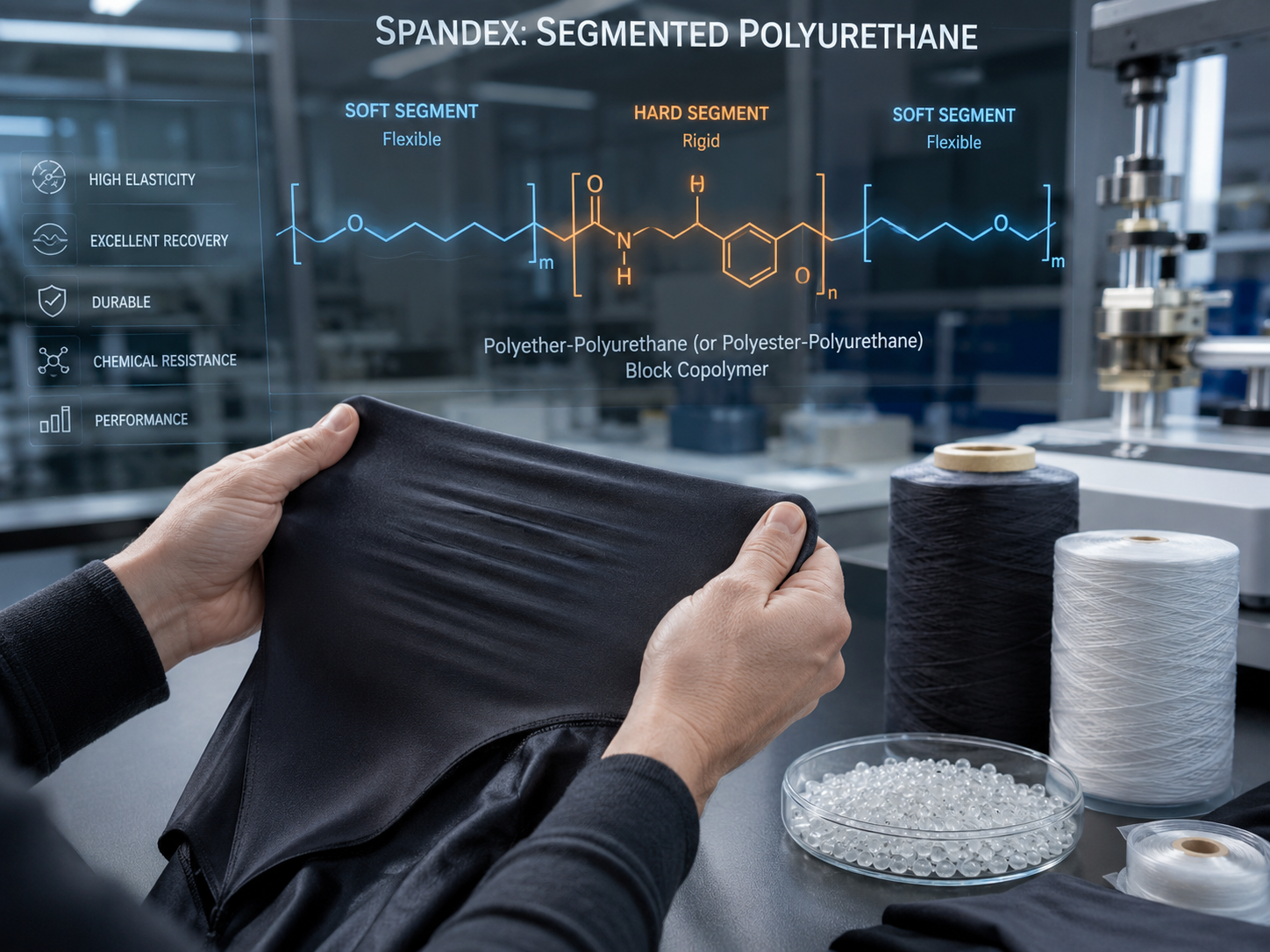
Chemically speaking, Spandex is a segmented block copolymer composed primarily of polyurethane, specifically a polyether-polyurethane or polyester-polyurethane.[^3] This polymer structure features flexible, long-chain "soft" segments (typically polyether or polyester glycols) that provide elasticity, interspersed with rigid, shorter "hard" segments (often diisocyanates and chain extenders) that offer structural integrity and strength.
Dive Deeper: The Polyurethane Puzzle and Its Performance Impact
When I evaluate Spandex suppliers, one of the first things I look into is the specifics of their polyurethane formulation. It's not just "polyurethane"; it's how that polyurethane is built. The magic of Spandex lies in its unique block copolymer structure. Imagine a long chain made up of two types of blocks:
- Soft Segments: These are long, flexible, amorphous segments, usually polyether or polyester glycols. They act like tiny springs, allowing the fiber to stretch easily. The length and type of these segments greatly influence the fiber's ultimate stretchability and softness. Longer, more flexible soft segments typically yield a fiber with higher elongation but potentially lower recovery force.
- Hard Segments: These are shorter, more rigid, crystalline segments, formed by the reaction of a diisocyanate with a chain extender. They act as anchors, providing strength and ensuring the fiber returns to its original shape. These segments form hydrogen bonds between chains, creating a physical cross-linking that prevents the fiber from permanent deformation.[^4] The proportion and arrangement of these hard segments dictate the fiber's modulus (resistance to deformation) and recovery power.
The precise ratio and chemical nature of these soft and hard segments are critical differentiators among various Spandex fibers. For example:
- Polyether-based Spandex often offers excellent hydrolysis resistance, making it ideal for swimwear or garments exposed to moisture, and can provide a softer hand-feel.
- Polyester-based Spandex might excel in areas like resistance to UV light and oxidation, making it suitable for outdoor activewear.
From a procurement perspective, this means that specifying "Spandex" is not enough. You need to understand which type of polyurethane is being used and how it’s engineered. For high-performance yoga wear, for instance, we need a Spandex with excellent recovery to prevent bagging at the knees or seat. This requires a specific balance of hard and soft segments to provide both stretch and powerful snap-back. In contrast, a garment needing gentle drape might prioritize softer segments for lower recovery force.
Understanding this segmented copolymer structure helps us, as manufacturers, discuss technical specifications with suppliers more effectively. It allows us to ask informed questions about their polymer synthesis and how they tailor it for specific applications like high-compression leggings or lightweight, breathable athletic tops. This isn't just theoretical chemistry; it directly translates to whether a pair of leggings retains its shape after a strenuous workout or whether a swimwear piece holds up against chlorine.
How Is Spandex Manufactured for Performance?
Knowing the chemical components of Spandex is only half the battle; how those components are assembled into a fiber profoundly impacts its final performance. Are you aware that different Spandex manufacturing processes can result in vastly different elasticity, durability, and cost? Overlooking these production nuances can lead to material choices that fail to meet your product's performance benchmarks.
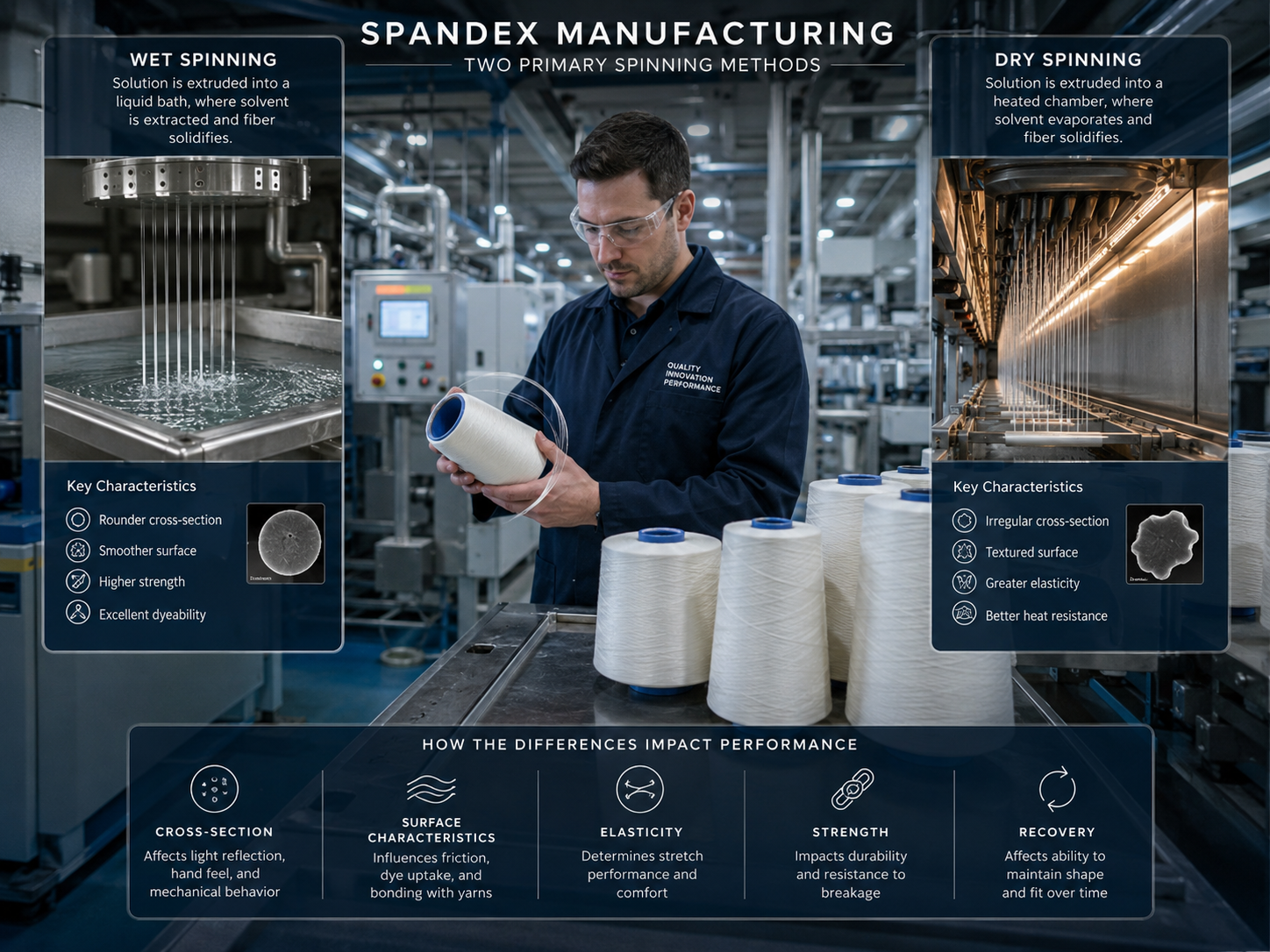
Spandex is primarily manufactured using two distinct methods: dry spinning and wet spinning.[^5] Both processes involve dissolving the polyurethane polymer in a solvent to create a spinning solution, but they differ in how the solvent is removed and the fiber is solidified. These variations directly influence the fiber's cross-section, surface characteristics, and ultimately, its mechanical properties like elasticity, strength, and recovery, tailoring it for specific end-uses in textiles.
Dive Deeper: Dry Spinning vs. Wet Spinning Spandex and Post-Processing
The manufacturing process is where the raw polyurethane polymer transforms into the elastic fiber we know. When I visit a Spandex supplier's factory, I pay close attention to their production lines because it tells me a lot about the consistency and quality I can expect. The two primary methods, dry spinning and wet spinning, each have their strengths and are chosen based on the desired fiber properties and economic considerations.
Dry Spinning vs. Wet Spinning Spandex?
Let's break down these two key manufacturing techniques:
1. Dry Spinning:
- Process: In dry spinning, the polyurethane solution (dope) is extruded through a spinneret into a column filled with hot inert gas (usually nitrogen).[^6] As the solvent evaporates into the hot gas, the polymer solidifies into continuous filaments.
- Characteristics:
- Typically produces fibers with a more uniform, smooth, and circular cross-section.
- Generally allows for faster production speeds.
- Often results in fibers with excellent elasticity, strength, and finer deniers.
- Less environmentally intensive in terms of water usage compared to wet spinning, but requires careful solvent recovery.
- Commercial Implications: This method is often preferred for high-performance Spandex applications where consistent quality, high elasticity, and fine deniers are crucial, such as premium activewear, hosiery, and delicate intimate apparel. My company frequently specifies dry-spun Spandex for our high-end yoga wear because of its superior hand-feel and recovery.
2. Wet Spinning:
- Process: In wet spinning, the polymer solution is extruded through a spinneret into a coagulation bath, typically containing water or a dilute solvent. The solvent diffuses out of the polymer into the bath, causing the polymer to precipitate and solidify into filaments.[^7]
- Characteristics:
- Often produces fibers with a more irregular or kidney-bean-shaped cross-section.
- Generally slower production speeds.
- Can be more versatile for certain applications, sometimes yielding fibers with higher tenacity but potentially less uniform elasticity compared to dry spinning.
- Requires significant water treatment for the coagulation bath.
- Commercial Implications: While dry spinning is more common for standard Spandex, wet spinning can be used for specific types of Spandex or when certain properties are prioritized. It might be found in more industrial or specialized elastic applications where extreme durability or specific deniers are needed, sometimes at a lower cost point.
Here's a quick comparison:
| Feature | Dry Spinning Spandex | Wet Spinning Spandex |
|---|---|---|
| Solvent Removal | Evaporation into hot gas | Diffusion into a coagulation bath |
| Fiber Cross-Section | More uniform, often circular | More irregular, kidney-bean shaped |
| Production Speed | Generally faster | Generally slower |
| Elasticity/Recovery | Excellent, consistent | Good, can be more varied |
| Strength | Very good | Good to very good |
| Typical Use | Premium activewear, hosiery, fine textiles | Industrial elastic, specialized applications |
| Environmental Impact | Solvent recovery critical, less water usage | Water treatment of bath critical, higher water usage |
The Importance of Post-Processing and Finishing
Beyond the spinning method, how the Spandex fiber is treated after it's formed is also vital. Post-processing steps like heat setting are critical. During heat setting, the fibers are stretched and then heated to a specific temperature, which stabilizes their structure.[^8] This process "sets" the elastic memory of the fiber, significantly improving its dimensional stability, recovery power, and resistance to shrinking or bagging out in the finished garment. Without proper heat setting, even high-quality spun Spandex might underperform.
Additionally, various finishing agents can be applied to the fiber to enhance properties like:
- Hand-feel: Making it softer or smoother.
- Friction reduction: Important for knitting and weaving processes.
- Dye affinity: Ensuring even and vibrant color uptake.
- Durability enhancers: Improving resistance to chlorine, UV, or heat degradation.
As a manufacturer, I always inquire about a supplier's post-processing capabilities. Their ability to precisely control heat setting and apply appropriate finishes directly correlates to the consistency and long-term performance of the fabrics we produce. This attention to detail in manufacturing ensures that our sportswear products, whether yoga pants or swimwear, not only feel great but also maintain their integrity and performance after repeated use and washing.
Why Does Spandex Chemistry Matter for Sportswear Buyers?
Choosing the right Spandex isn't just about finding any stretch fabric; it's about making a strategic decision that directly impacts your brand's reputation and customer satisfaction. Have you experienced product returns due to fabrics losing elasticity or failing prematurely? These common issues often stem from a lack of understanding about how Spandex chemistry and manufacturing influence real-world performance.
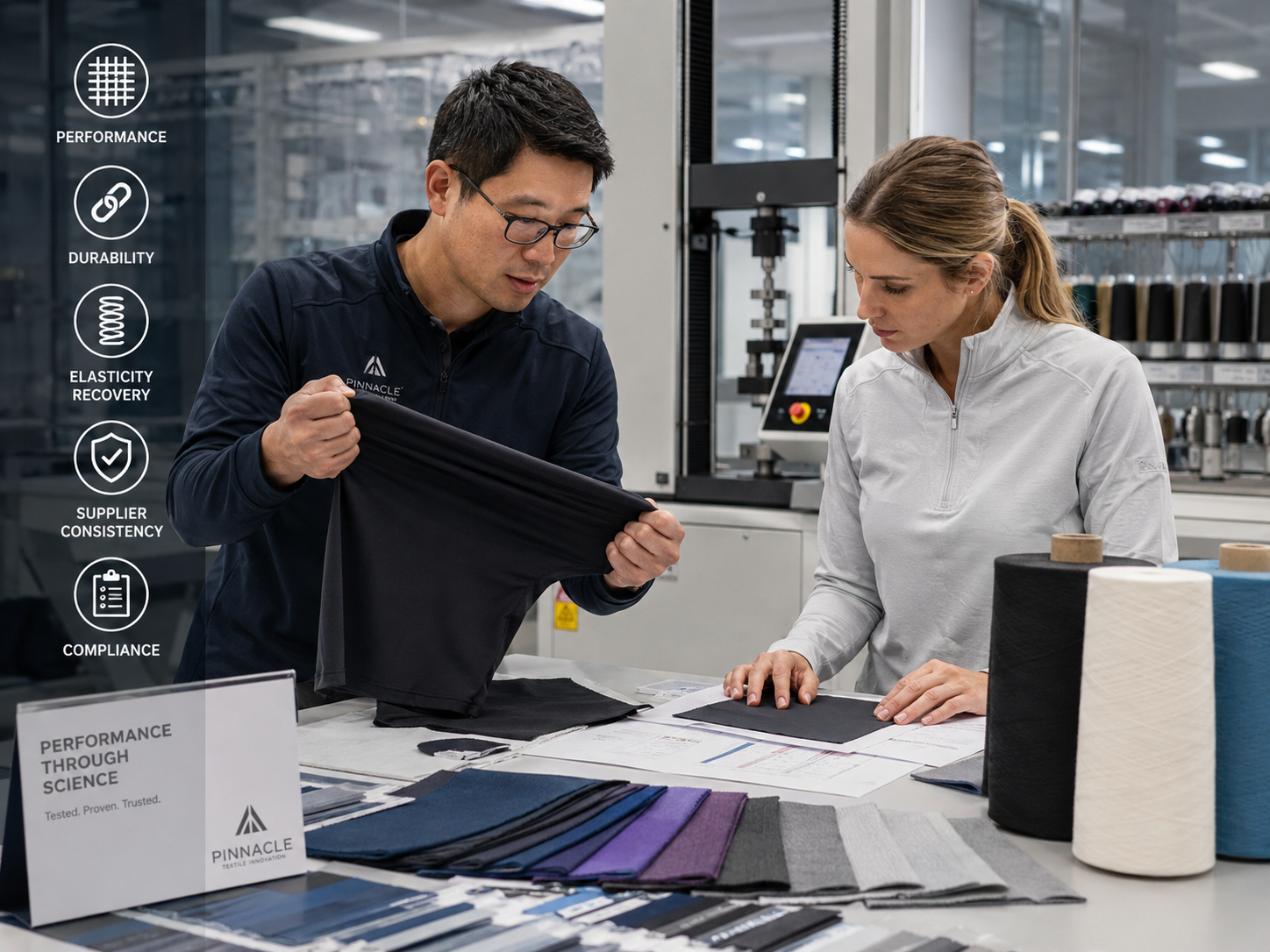
For sportswear buyers, understanding Spandex chemistry and manufacturing is crucial because it allows for informed material selection that directly correlates to product performance, durability, and cost-effectiveness. This knowledge empowers buyers to specify the optimal type of Spandex for diverse applications—such as high-compression activewear versus lightweight athleisure—and to effectively evaluate suppliers based on their ability to deliver consistent, high-quality, and compliant elastic fibers.
Dive Deeper: Performance Beyond Simple Stretch and Quality Control
When my team and I source Spandex-containing fabrics, we're not just looking for a material that "stretches." We're looking for specific performance attributes that are directly tied to the fiber's chemical composition and how it was produced. This is where the rubber meets the road for B2B procurement.
Performance Beyond Simple Stretch
"Stretch" is a broad term. What we actually need for sportswear goes far beyond simple elongation:
- Elasticity vs. Power/Recovery: This is a crucial distinction. All Spandex stretches (elasticity), but the ability to return to its original shape with a strong "snap-back" (power/recovery) is what prevents bagging and provides support. A Spandex with strong recovery is essential for compression garments, supportive yoga wear, and swimwear. Without it, your leggings might stretch out after a single wear, or your sports bra could lose its support. The ratio of hard to soft segments in the polyurethane, and the effectiveness of heat setting during manufacturing, directly dictate this.
- Durability: Sportswear faces harsh conditions: sweat, repeated washing, UV exposure, and sometimes chlorine.
- Chlorine Resistance: Absolutely vital for swimwear. Certain Spandex formulations (often those with polyether soft segments) are engineered to resist degradation from chlorine, ensuring longer life for swimsuits. Generic Spandex will quickly lose its stretch and become brittle in chlorinated water.[^9]
- UV Resistance: Important for outdoor activewear. UV stabilizers can be incorporated into the polymer, or specific polyurethane types can be chosen to minimize photodegradation, which can cause yellowing and loss of elasticity.
- Heat Resistance: Relevant during fabric processing (dyeing, drying) and wear (e.g., hot yoga). Spandex must withstand these temperatures without losing its integrity.
- Hand-feel and Drape: The type of Spandex, its denier, and its cross-sectional shape (influenced by dry vs. wet spinning) all contribute to how a fabric feels against the skin and how it drapes. For example, a finer denier Spandex might create a softer, lighter fabric, while a larger denier could offer more robust support. The choice directly impacts wearer comfort and the overall aesthetic of the garment.
- Dyeability: Ensuring the Spandex can be dyed uniformly with the accompanying fibers (like nylon or polyester) is important for achieving consistent and vibrant colors without dye migration or un-dyed specks.[^10] Some Spandex types are specifically engineered for better dye uptake with particular dye classes.
From my experience, if you're sourcing fabrics for high-intensity yoga apparel, you need Spandex with superior recovery and moisture-wicking compatibility. For swimwear, chlorine resistance is paramount. These aren't minor details; they are fundamental performance requirements that your customers will notice immediately.
Quality Control and Supplier Evaluation
Understanding the technical aspects of Spandex empowers you to ask the right questions and conduct thorough supplier evaluations. When we work with suppliers, we delve into:
- Polymer Type: Is it polyether or polyester-based? What are the key performance attributes of their specific polyurethane formulation?
- Manufacturing Process: Do they use dry spinning or wet spinning? What are their quality control measures for consistency in the spinning process?
- Certifications: We always verify that the Spandex, and the finished fabric, complies with international safety and environmental standards like OEKO-TEX®, ISO9001, CE, AZO-free, and REACH. This ensures the material is safe for wear and meets global market entry requirements. Our company, for instance, ensures all products meet TüV Rheinland and SGS certifications.
- Testing Protocols: What internal tests do they perform? We expect suppliers to have robust testing for:
- Stretch and Recovery: Measuring elongation and force return under various conditions.
- Wash Durability: Assessing how the Spandex holds up after multiple wash cycles.
- Chlorine/UV Resistance: Specific tests for specialized applications.
- Color Fastness: To ensure the dye won't bleed or fade.
- Elasticity Decay: Tracking performance over time or after simulated strenuous use.
- Technical Support: A good supplier provides comprehensive technical data sheets and is willing to discuss application-specific challenges. This is vital for troubleshooting and innovation.
By understanding what Spandex is made of and how it’s manufactured, we move beyond generic material specifications. We engage in informed discussions with suppliers, make strategic choices that align with our product performance goals, and ultimately deliver superior sportswear to our clients, minimizing risks and maximizing value. This is how we ensure that the quality promise we make to our customers is built on a solid foundation of material science.
Frequently Asked Questions
What is the difference between Spandex and Lycra?
Lycra is a brand name for a type of Spandex fiber manufactured by The Lycra Company. Essentially, all Lycra is Spandex, but not all Spandex is Lycra. Lycra is renowned for its consistent quality and high performance, often being a premium choice among various Spandex fibers due to specific proprietary formulations and manufacturing processes.
How do I test Spandex quality in a fabric?
You can perform several tests: the "stretch and snap-back" test (stretch firmly and release, observing its immediate return), a wash test (check for elasticity degradation after washing), and a hand-feel test (good quality Spandex feels smooth and resilient). For precise evaluation, laboratories conduct standard tests for elongation, recovery, and durability under various conditions.
Can Spandex be recycled?
Recycling Spandex is challenging due to its complex polymeric structure and its typical use as a blend with other fibers like polyester or nylon. Separating these mixed materials economically and effectively remains a hurdle. While some efforts are underway for chemical recycling of certain polyurethane types, widespread mechanical recycling of Spandex-containing fabrics is not yet common practice.
What affects Spandex durability over time?
Several factors affect Spandex durability, including exposure to high heat, harsh chemicals (like chlorine), UV light, friction from wear, and aggressive washing. The inherent quality of the Spandex fiber itself—its specific polyurethane formulation and manufacturing method—also plays a significant role. Choosing high-quality, application-appropriate Spandex is key.
Conclusion
Understanding what Spandex is made of, from its core polyurethane chemistry to the nuances of its manufacturing processes like dry or wet spinning, is far more than a technical detail—it's a commercial imperative. This knowledge empowers B2B buyers to make informed decisions that directly impact product performance, longevity, and ultimately, brand reputation. Not all Spandex is created equal, and discerning the differences in elasticity, recovery, and durability based on its composition allows you to select the precise Spandex fiber needed for high-quality sportswear, from high-compression yoga wear to chlorine-resistant swimwear.
As a dedicated OEM/ODM sportswear manufacturer, we leverage this deep material expertise to ensure every product we create meets stringent performance standards. If you're looking to source custom sportswear with guaranteed fabric performance and quality, we are here to help. Contact us to discuss your specific material requirements and explore how our expertise in Spandex-containing fabrics can elevate your next collection.